There is one question that always arrives at the same moment: when the home has been chosen, the offer is almost ready and the family starts going through the figures with the bank. “On top of the price, how much do I need to set aside?” It is the right question, and it often comes too late.
In the guide on how to buy a second home by the sea without making mistakes I summed up the rules on purchase taxes. Here we go one step further: the full figures, item by item, on two concrete examples in Eraclea Mare, the first bought from a private seller and the second from a company. Then come the items that are not taxes but weigh just as much: the notary, the agency, the preliminary contract, the mortgage and IMU, the annual municipal property tax.
The purchase tax rates come from the Italian Revenue Agency's (Agenzia delle Entrate) page on buying a home and from the rules in force in November 2026; the IMU rate comes from the Municipality of Eraclea. The cadastral incomes in the examples are hypothetical: for your own home the calculation is redone with the real figure, the one shown in the land registry extract (visura catastale).
Which taxes you pay when buying a second home in Italy in 2026
For a second home, the taxes depend on who is selling and how they sell. There are three schemes: a private seller, a company selling without VAT, and a company selling with VAT (IVA). The prima casa (first-home) tax relief does not apply, so the full rates do.
| Who is selling | Taxes | On what basis |
|---|---|---|
| Private seller | registration tax 9% (minimum €1,000), mortgage registry tax €50, land registry tax €50 | cadastral value, with the prezzo-valore |
| Company, VAT-exempt sale | registration tax 9% (minimum €1,000), mortgage registry tax €50, land registry tax €50 | cadastral value, with the prezzo-valore |
| Company, sale with VAT | VAT 10% (22% for categories A/1, A/8, A/9), registration, mortgage registry and land registry tax €200 each | sale price |
Source: Italian Revenue Agency (Agenzia delle Entrate), “Acquisto di una casa: le imposte” (Buying a home: the taxes).
The middle row surprises many families. Buying from a company does not necessarily mean paying VAT: for the Revenue Agency, the general rule is that the sale of a home by a company is exempt. VAT applies when the seller is the company that built or renovated the home, within 5 years of the end of the work, or later too if the company chooses to apply it and states this in the deed.
So before you make an offer, the question about the price comes with another one: who is selling me this home, and under which tax regime? Two flats at the same price can carry very different taxes.
The prezzo-valore: why you pay tax on the cadastral value when buying from a private seller
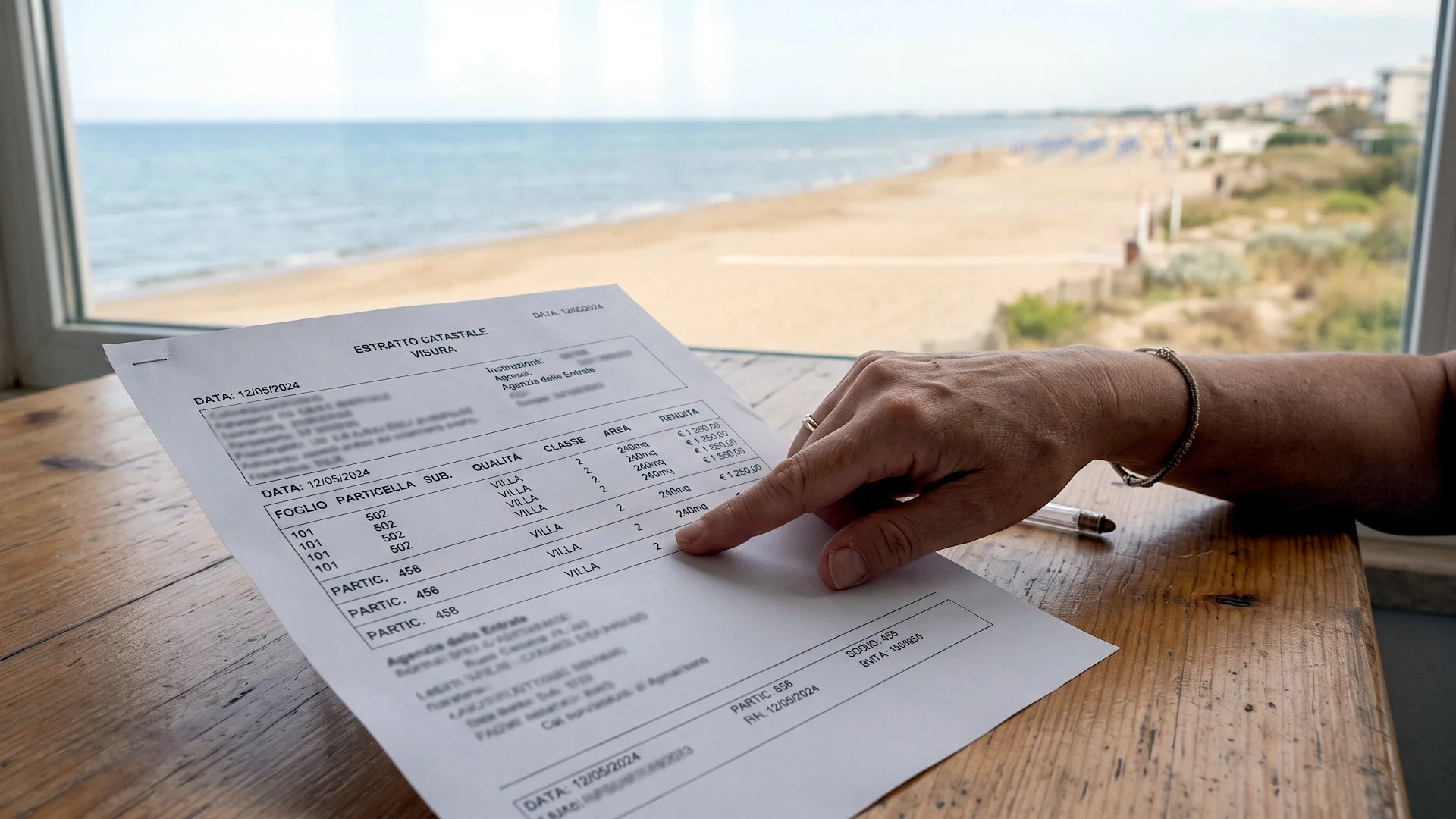
The prezzo-valore (price-value rule) is the mechanism that makes buying from a private seller the lightest option in tax terms. The taxes are not calculated on the price you pay, but on the home's cadastral value, which for second homes is worked out like this: cadastral income (rendita catastale, the notional income recorded for the property at the catasto, the Italian land registry) × 1.05 × 120.
The Revenue Agency gives an example worth keeping in mind. A home with a cadastral income of €900, bought for €200,000, has a cadastral value of €113,400: the registration tax at 9% comes to €10,206. Without the prezzo-valore, on the full price, it would have been €18,000.
There are four conditions, and all of them must be met:
- the buyer is a private individual who is not acting in the course of a business or profession;
- the property is residential, including its appurtenances, such as a garage or cellar;
- the request is made to the notary in the deed of purchase, explicitly;
- the deed states the price actually agreed.
The prezzo-valore applies to sales between private individuals and also when the seller is a company making a VAT-exempt sale. Besides the tax saving, it brings two lesser-known advantages. The Revenue Agency cannot reassess the value for registration tax purposes, unless part of the price has been concealed, and the law provides for a 30% reduction in notary fees.
Example 1: a flat in Eraclea Mare bought from a private seller
Let us take a realistic case. A flat of 75 m² gross in Eraclea Mare, in normal condition, sold by a private individual. According to the Revenue Agency's property market observatory, the OMI (Osservatorio del Mercato Immobiliare), in zone E6 Eraclea Mare a home in normal condition is worth €1,700 to €2,000 per m² (first half of 2026). At the top of the range, the price is €150,000. How to read these quotations, and why the Jesolo average is misleading, is explained in the guide on what a home in Eraclea Mare is really worth.
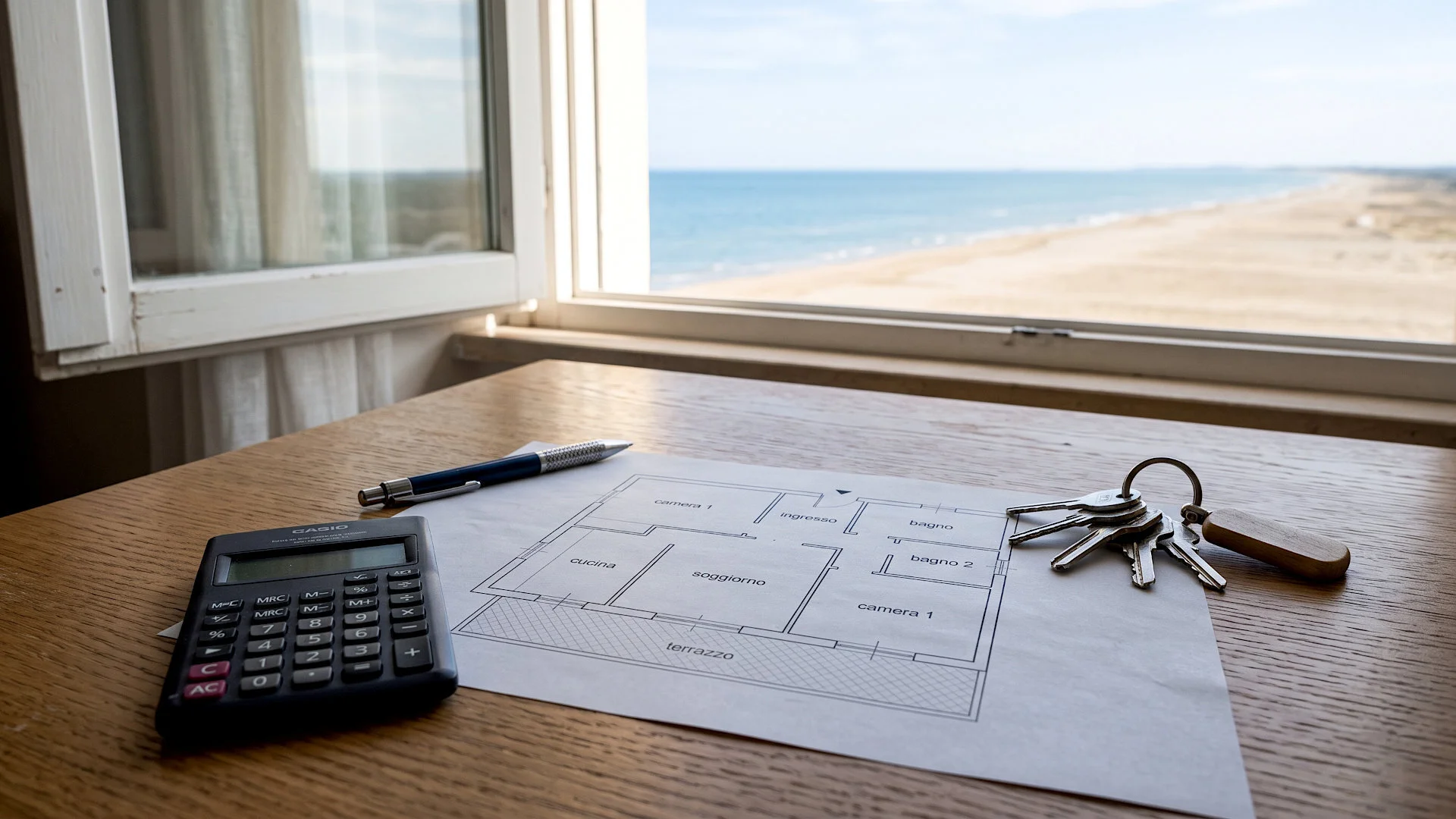
The cadastral income depends on the category, the class and the number of rooms of each individual home: you will find it in the visura. For this example we assume a cadastral income of €450. Here is the calculation.
How the taxes are calculated when you buy from a private seller
Uplift the cadastral income by 5%
€450 × 1.05 = €472.50.
Multiply by 120
€472.50 × 120 = €56,700 of cadastral value.
Apply the 9% registration tax Key step
€56,700 × 9% = €5,103. That is above the €1,000 minimum, so this is the figure.
Add the two fixed taxes
€50 of mortgage registry tax and €50 of land registry tax.
Total taxes
€5,203. On the full price, the registration tax alone would have been €13,500.
There is welcome news on the minor items. When the deed is subject to proportional registration tax, the Revenue Agency specifies that the deed and the filings with the land registry and the property registers are *exempt from stamp duty (imposta di bollo), special land registry fees and mortgage registry fees*. In this case, the taxes on the purchase really are just those three lines.
The calculation would be identical, €5,203, if the seller were a company making a VAT-exempt sale. That is the case, for example, of a company selling more than five years after the end of the work without opting for VAT.
Example 2: a new flat of the same size, bought from a company charging VAT
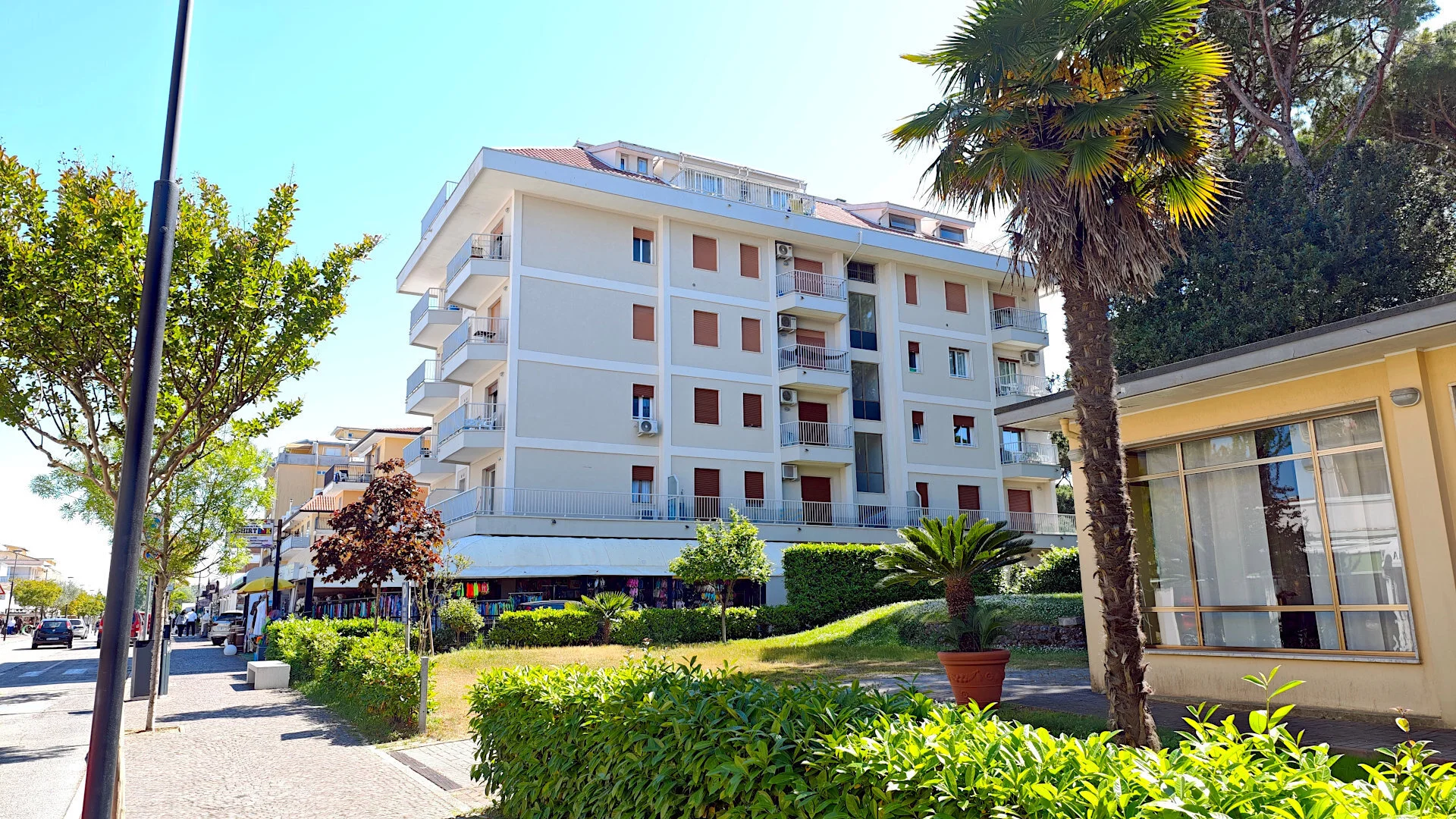
Now let us change the seller. A new flat of the same size, 75 m² gross, sold by the company that built it within 5 years of the end of the work. For a new home we take the OMI quotation for excellent condition, which in Eraclea Mare runs from €2,400 to €3,100 per m². At the bottom of the range, the price is €180,000.
Here there is no prezzo-valore: VAT is calculated on the sale price.
- VAT at 10% on €180,000: €18,000.
- Registration, mortgage registry and land registry tax, fixed: €200 each, €600 in all.
- Total taxes: €18,600.
The most instructive comparison, though, is at the same price. If the new flat also cost €150,000, VAT would come to €15,000, plus €600 of fixed taxes: €15,600, three times the €5,203 of the purchase from a private seller. That is the difference between a tax calculated on the price and one calculated on the cadastral value.
From a private seller or a VAT-exempt company
The taxes are calculated on the cadastral value with the prezzo-valore. On the home in the example, €150,000 with a cadastral income of €450.
What you pay
- registration tax 9% on the cadastral value: €5,103
- mortgage registry and land registry tax: €100
- total taxes: €5,203
From a company charging VAT
VAT is calculated on the agreed price, with no prezzo-valore. On the new home in the example, €180,000.
What you pay
- VAT 10% on the price: €18,000
- registration, mortgage registry and land registry tax: €600
- total taxes: €18,600
At this point some people conclude that it always pays to buy from a private seller. On taxes, that is true, but taxes are only part of what a home costs. A flat in normal condition may need work that a new one does not: wiring and plumbing to redo, windows, a bathroom to refit. An honest comparison puts the taxes and the work side by side, and only then tells you which of the two homes really costs less.
How much the notary costs when you buy a second home
In Italy the notary is a public official who draws up the deed of sale, and does two jobs in the same deed. The notary collects the registration, mortgage registry and land registry taxes and pays them over when the deed is registered, and there is nothing to negotiate there: they are the same with any notary. Then there is the notary's fee, which is another matter.
Since 2012 the fixed fee scales of the regulated professions have been abolished: this was established by article 9 of Decree-Law 1/2012. The fee is agreed when the notary is instructed, and the law requires its amount to be communicated to you in advance, with a written or digital quote that lists the individual cost items.
That is why you will not find a figure for the fee in this article: there is no price list valid for everyone, and an invented average would only give you a wrong budget. What you can do is ask for several quotes and read them carefully:
- separate the taxes from the fee and the office costs;
- check that the taxes are calculated for a second home, not a first home;
- remember that 22% VAT is charged on the fee;
- if you buy from a private seller with the prezzo-valore, ask the notary how they apply the 30% fee reduction provided for by law.
If you buy with a mortgage, the mortgage deed is a second deed, with its own fee. Ask for the quote to cover both.
The agency’s commission: when it is due and how it is declared
Commission is the item surrounded by the most myths, so let us start with the law. Under the Italian Civil Code, the intermediary (mediatore) is the person who puts two or more parties in contact for the conclusion of a deal. Article 1755 adds that the intermediary is entitled to commission from each of the parties if the deal is concluded as a result of their involvement.
The amount of the commission is set by agreement: this is the “pact” the same article refers to. In practice, you will find it written in the mandate or in the purchase offer you sign with the agency. Read that line before you sign and ask whether the figure includes VAT: if the agency charges it, it is 22%.
Two checks protect you. The first: Law 39/1989 grants the right to commission only to those registered as estate agents (agenti d'affari in mediazione), and the notary must report to the Revenue Agency any agents who are not registered. The second: in the rogito you declare how much you paid the agency and how. It is wise to pay the commission by traceable means, because those details end up in the deed.
The preliminary contract and the mortgage: the two items people forget
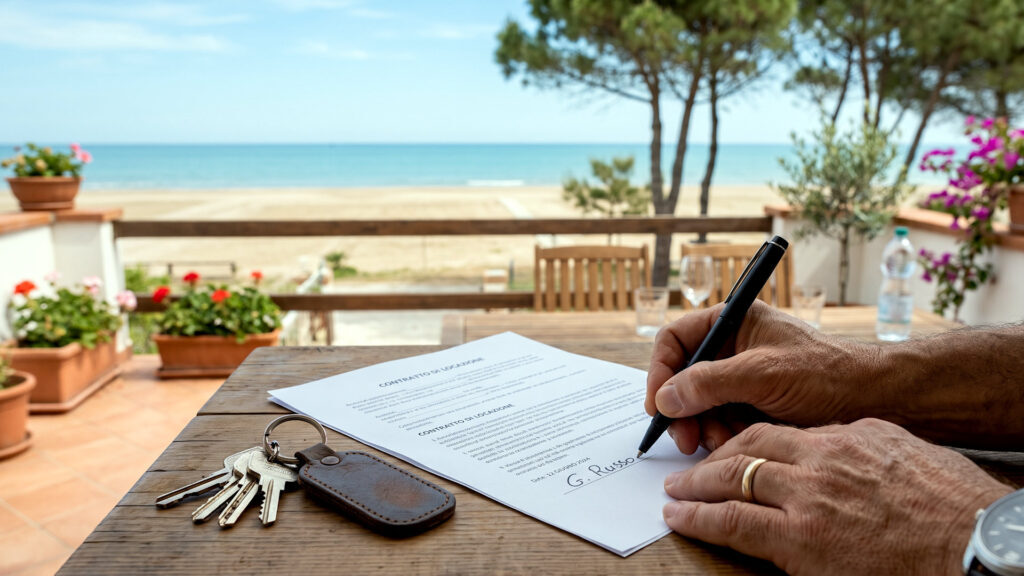
Between the offer and the rogito there is often a preliminary contract (contratto preliminare, also known as the compromesso), and the preliminary contract has a cost too. It must be registered within 30 days of signing, with a fixed registration tax of €200 and stamp duty of €16 for every four pages. On top of that, 0.5% is due on the deposit (caparra confirmatoria).
Let us go back to the private-seller example. With a hypothetical deposit of €15,000, the proportional tax on the preliminary contract comes to €75. Those €75 are not lost: the Revenue Agency explains that the proportional tax paid on the deposit is deducted from the tax due on the final deed. What you are left paying is the fixed €200 and the stamp duty.
If you are buying from a company charging VAT, ask the notary how to structure and tax the deposit and any advance payments before you sign the preliminary contract. I also cover this in the guide to the purchase offer for a second home.
The second forgotten item is the substitute tax on the mortgage (imposta sostitutiva). For a mortgage that is not for buying a first home, Presidential Decree 601/1973 sets the rate at 2% of the amount advanced. On a €100,000 mortgage that is €2,000, to be included in the budget alongside the purchase taxes from the very first calculation. You will find the other differences in the guide to mortgages for a second home by the sea.
IMU and the costs that come after the rogito
From the day you become the owner there is IMU, the municipal property tax. For a second home in Eraclea it is calculated on the cadastral income uplifted by 5% and multiplied by 160, at the Municipality's rate for “other buildings”: 0.97%, unchanged in 2026.
On the same cadastral income as in the example, €450, the calculation is: 450 × 1.05 × 160 = €75,600 of taxable base, which at 0.97% comes to about €733 for a full year. The Municipality of Eraclea collects it in two instalments, the first by 16 June and the balance by 16 December.
In the year of the rogito, however, IMU is paid for the months of ownership, not for the whole year: this is laid down by the 2020 Budget Law (Law 160/2019, article 1, paragraph 761). The month of the rogito counts as yours if you own the home for more than half of its days, and the day of the rogito counts for the buyer. With a rogito on 10 September, for example, September is yours: you pay four months out of twelve, about €244 instead of €733.
Then there is a detail about IRPEF, the Italian personal income tax, that applies in one specific case. If the second home is not let and is in the same municipality as your main home, half of its income is added to your IRPEF taxable base, on top of IMU. If, on the other hand, you live in another municipality and buy in Eraclea, IMU replaces IRPEF on the home that is not let.
On top of the taxes come the running costs: TARI (the municipal waste tax), condominium fees and utilities. And if the home will stay closed over the winter, it is worth knowing from the start how to prepare it: you will find everything in the guide on how to protect a second home by the sea in winter.
The full bill: how much to set aside on top of the price
Let us put it all together. The table sums up the items for the two examples, with the figures that can be calculated today and those that depend on a quote.
| Item | From a private seller (€150,000, cadastral income €450) | From a company charging VAT (€180,000) |
|---|---|---|
| Purchase taxes | €5,203 | €18,600 |
| Notary's fee | from a written quote, reduced by 30% with the prezzo-valore, plus 22% VAT | from a written quote, plus 22% VAT |
| Agency commission | as per the written agreement, if there is an intermediary, plus 22% VAT if charged | as per the written agreement, if there is an intermediary, plus 22% VAT if charged |
| Preliminary contract | €200 fixed, stamp duty, 0.5% on the deposit (later deducted) | ask the notary |
| Mortgage, if any | substitute tax of 2% of the amount advanced, plus the fee for the mortgage deed | same rule |
| IMU for a full year | about €733 | depends on the cadastral income of the new home (€733 with the same cadastral income) |
The first mistake I see in families' budgets is counting only the first row. The second is mixing the rows up: a notary's quote that looks expensive may be so because it also covers the mortgage, and one that looks good value may have calculated the taxes at the wrong rate.
Massimo Ongaro, estate agent at ma.re.blu“The families who arrive at the rogito relaxed are the ones who knew every figure on the day of the offer. Getting there just takes sitting down with the visura and the quotes, before you sign.”
What to bring for a calculation of your completion costs
The real calculation is done on the real home, and it takes only a few documents. If you already have them, working out the taxes is a matter of minutes; for the notary and the mortgage you need the quotes.
Documents for an advance calculation of your completion costs
Up-to-date land registry extract (visura catastale)
cadastral income, category and class of each unit, including garage and cellar.
Seller details
private individual, building company, or company selling VAT-exempt.
Date the work was completed
for a new or renovated home, it decides whether VAT applies.
Expected price and deposit
needed for the preliminary contract and for the deduction.
Mortgage amount, if any
for the 2% substitute tax and for the second deed.
Notaries' written quotes
with taxes and fee shown separately.
Written agreement with the agency
commission, VAT included or excluded, how it is paid.
Municipality of your main home
to understand how IRPEF applies to the second home.
From the price to the real cost, before you sign
Buying a second home in 2026 costs the price plus a series of items that can all be known in advance. The taxes can be calculated to the cent with the visura, while the notary and the agency go in writing, in a quote and an agreement. Usually the only thing missing is the time to put it all in order.
If you have found your home, or are about to, book an advance calculation of your completion costs with our agency. Bring the visura and the details you have: we will go through the taxes, the preliminary contract, the mortgage and IMU with you, so that on the day you sign you already know every figure.
To work these sums out on a real price, look at the homes for sale in Eraclea Mare and the residences in the area.
Which taxes do you pay when you buy a second home in Italy from a private seller?
You pay registration tax of 9% on the cadastral value, with a minimum of €1,000, plus €50 of mortgage registry tax and €50 of land registry tax. The cadastral value of a second home is the cadastral income × 1.05 × 120, and you use it by asking the notary to apply the prezzo-valore in the deed. With a cadastral income of €450, the taxes come to €5,203.
How much VAT do you pay on a second home in Italy bought from a company?
If the seller is the company that built or renovated the home, within 5 years of the end of the work, or if it chooses to apply VAT, you pay 10% on the price (22% for categories A/1, A/8 and A/9). On top of that come €200 each of registration, mortgage registry and land registry tax. If the company sells VAT-exempt, you pay as you would to a private seller.
Is it better to buy a second home in Italy from a private seller or a company?
On taxes, the private seller wins: at the same price of €150,000, it is €5,203 against €15,600. A full comparison, though, also puts the work alongside: a resale home may need work that a new one does not, and the real cost only shows when you add the two together.
How much does the notary cost for a second home in Italy?
There is no single rate: since 2012 the professional fee scales have been abolished, and the notary must tell you the fee in advance with a written quote. 22% VAT is added to the fee. If you buy from a private seller with the prezzo-valore, the law provides for a 30% reduction in fees.
When is the estate agency's commission due in Italy?
Under the Italian Civil Code, the intermediary is entitled to commission from each party if the deal is concluded as a result of their involvement. The amount is set by agreement, written in the mandate or the offer: ask whether it includes VAT, which, if charged, is 22%. In the rogito you declare how much you paid and how.
What does a mortgage for a second home in Italy cost besides the interest?
For a mortgage to buy a home that is not your first home, the substitute tax is 2% of the amount advanced: on €100,000 that is €2,000. On top of this comes the notary's fee for the mortgage deed, which is a separate deed from the sale.
How much is the annual property tax (IMU) on a second home in Eraclea Mare?
The Municipality of Eraclea's 2026 rate for other buildings is 0.97%, on the cadastral income × 1.05 × 160. With a cadastral income of €450, that is about €733 a year, in two instalments: the first by 16 June and the balance by 16 December.