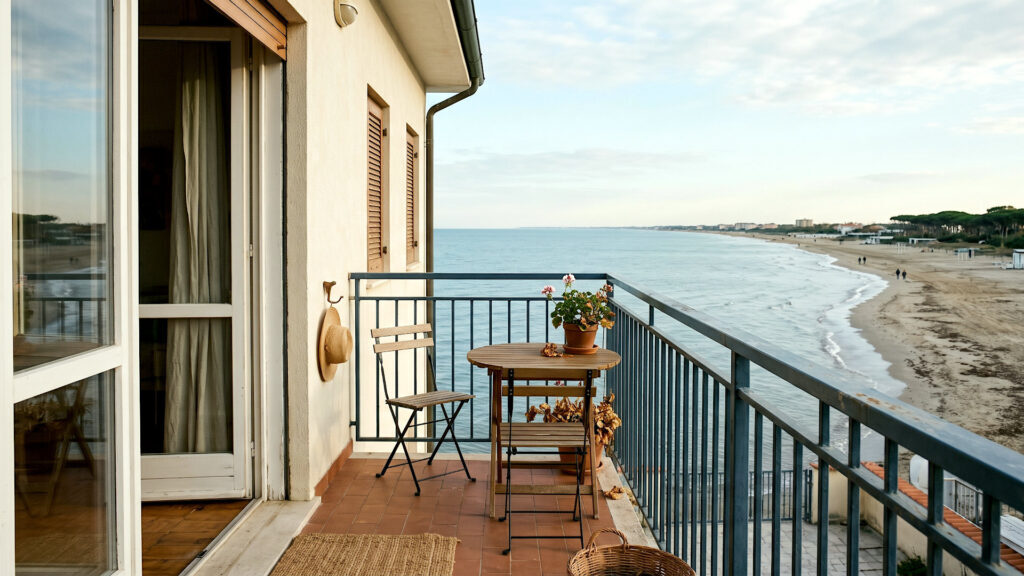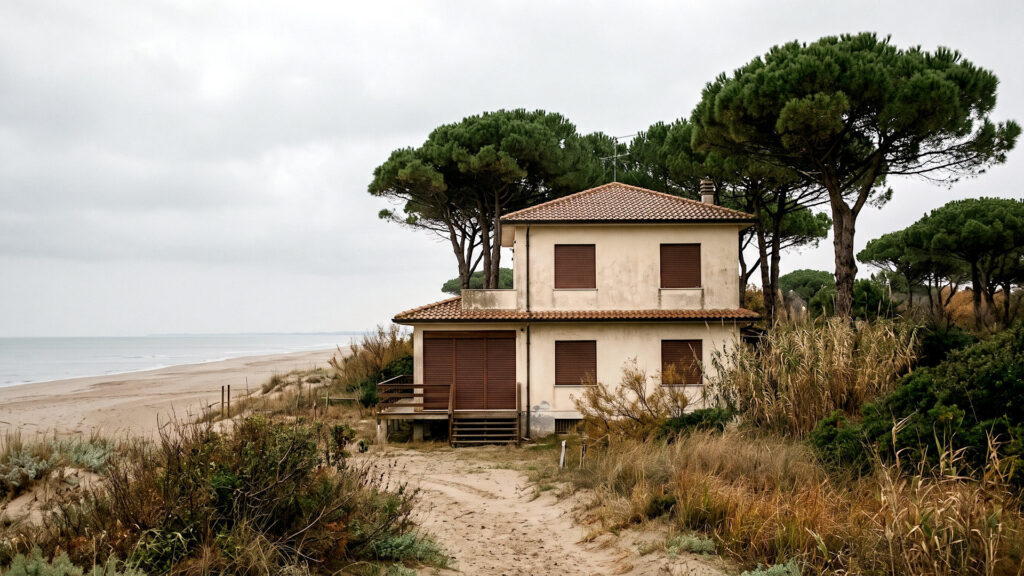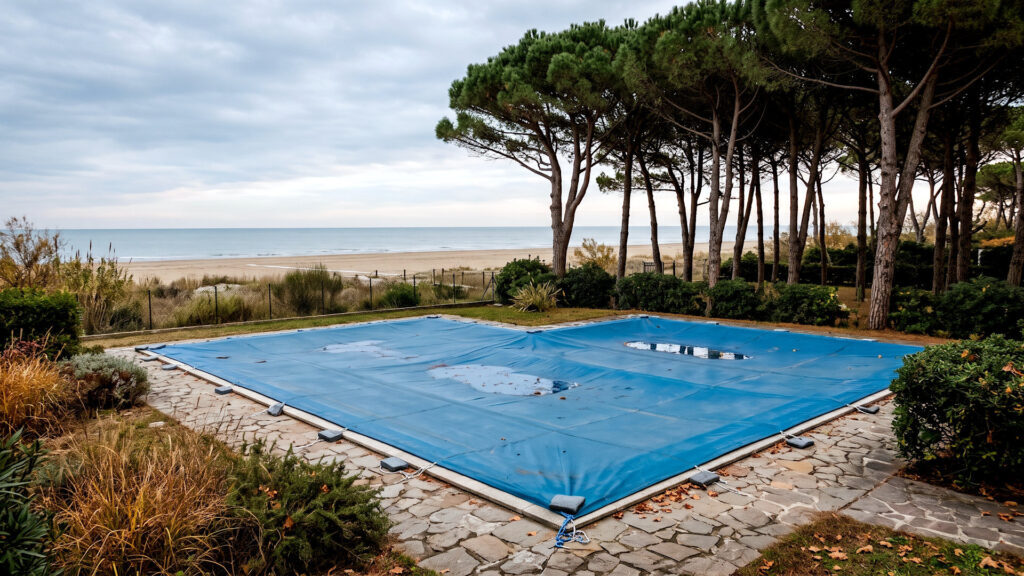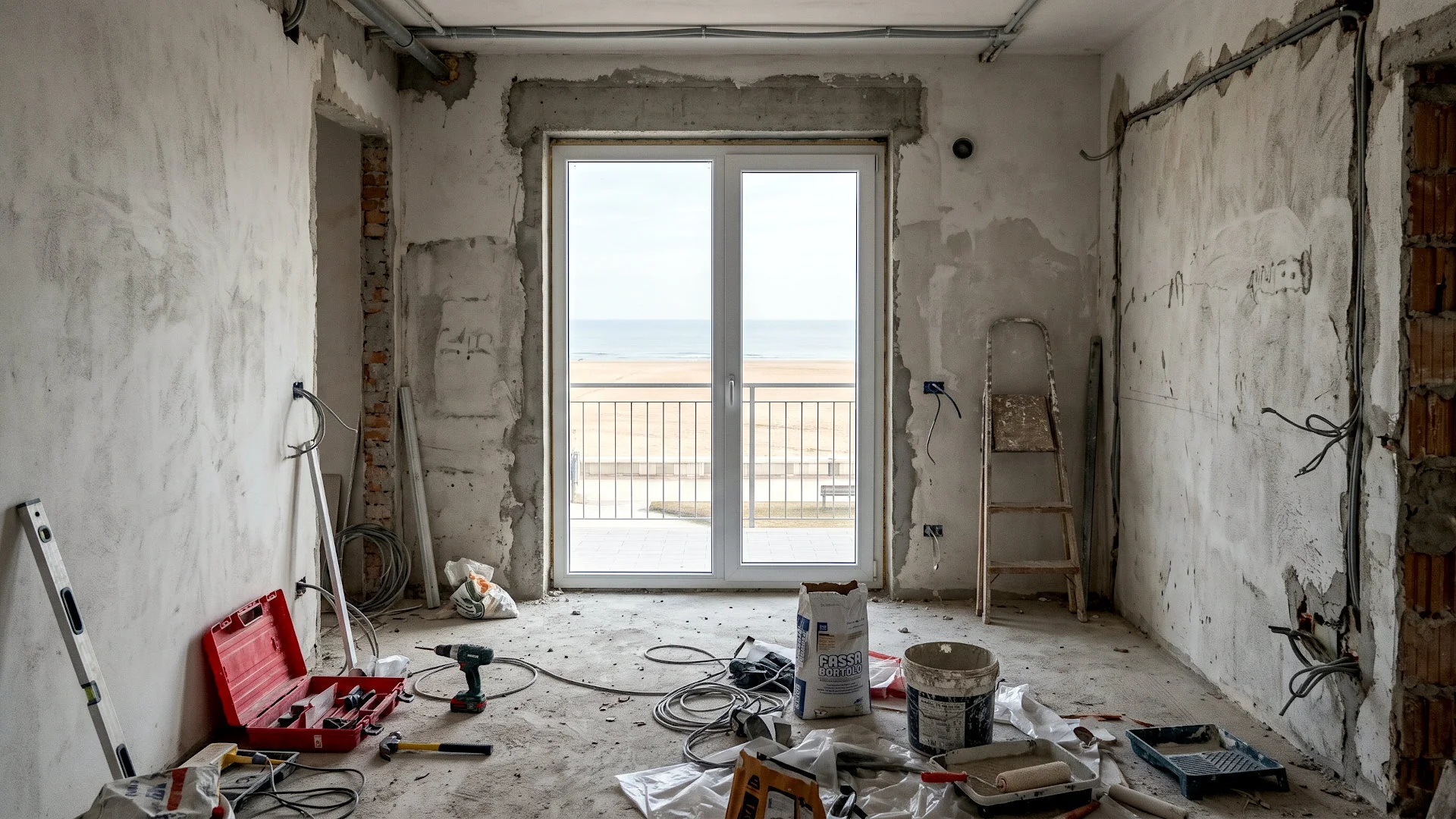
In mid-November Eraclea Mare is quiet, and the apartments in the residence complexes keep their shutters down until spring. If you own a second home here, these are the months to decide what to redo: the bathroom from the 1990s, the electrical system, windows that let the damp in. Between now and April is the window in which building work can actually be done.
The Municipality of Eraclea sets precise limits on building sites in the resort during the season. And in 2026 the Italian tax deduction for works on a home that is not your main residence has a rate that drops from 2027. Two dates, one local and one fiscal, that together tell you when to move.
In this guide you will find the municipal rules on building sites and the difference between works that qualify for the deduction and works that do not. Then the paperwork to prepare and a calendar from November to April. If you are looking for the yearly care routine against salt air, you will find it in the guide to holiday home maintenance against sea salt.
Why building work in Eraclea Mare is done in winter
The main reason lies in the Regolamento di disciplina delle attività civiche, the Municipality of Eraclea's bylaw on civic activities, published on the Municipality's website in the text amended in 2017. Article 52 sets the rules for building sites, and for the built-up area of Eraclea Mare it adds requirements that apply only here.
There are three rules, and they are best read together:
- from 1 July to 31 August all building sites are prohibited, with few exceptions: urgent works for public safety, works by the Municipality or of public utility that it authorises, urgent extraordinary maintenance certified by a technician and confirmed by the municipal technical office;
- from 1 May to 30 June and throughout September, sites already under way may only carry out work comparable to ordinary maintenance;
- in those same months, in Eraclea Mare, no new building sites may be set up, nor may public land be occupied for building work.
In calendar terms: a real job, with a site to open, is done in Eraclea Mare between October and April. If you start a new bathroom in March and discover in May that a pipe needs replacing, you are left with a site that can no longer carry out extraordinary works. And with a home that is not ready in June for the guests who booked it.
The bylaw also allows exemptions, in article 59. One covers works at an advanced stage that are needed to start the seasonal activity: you apply to the head of the technical department, it lasts at most fifteen days in a row and only once. It is a way out for an unexpected problem, and you cannot build a schedule on it.
One last detail to clarify before you start. The ban refers to the "built-up area of Eraclea Mare". If your home is on the edge of the resort, ask your technician or the Municipality's technical office whether it falls inside the boundary. And ask whether the bylaw has been amended since 2017: this is the published version, but confirming it takes one phone call.
Hours for noisy work, month by month
The same article 52 sets the hours in which noisy work is allowed across the whole municipality. The time bands change with the period of the year, and a firm coming from elsewhere may not know them.
| Period | Morning | Afternoon |
|---|---|---|
| 1 January to 31 May | 8.00 to 12.30 | 14.30 to 20.00 |
| 1 June to 31 August | 8.00 to 13.00 | 15.00 to 20.30 |
| 1 October to 31 December | 8.00 to 12.00 | 13.30 to 20.00 |
September has no band of its own in that article. If your works fall then, ask your technician which hours apply. Put the hours in the contract with the building firm, together with the dates: the bylaw applies even when the residence looks empty.
The works calendar, from November to April
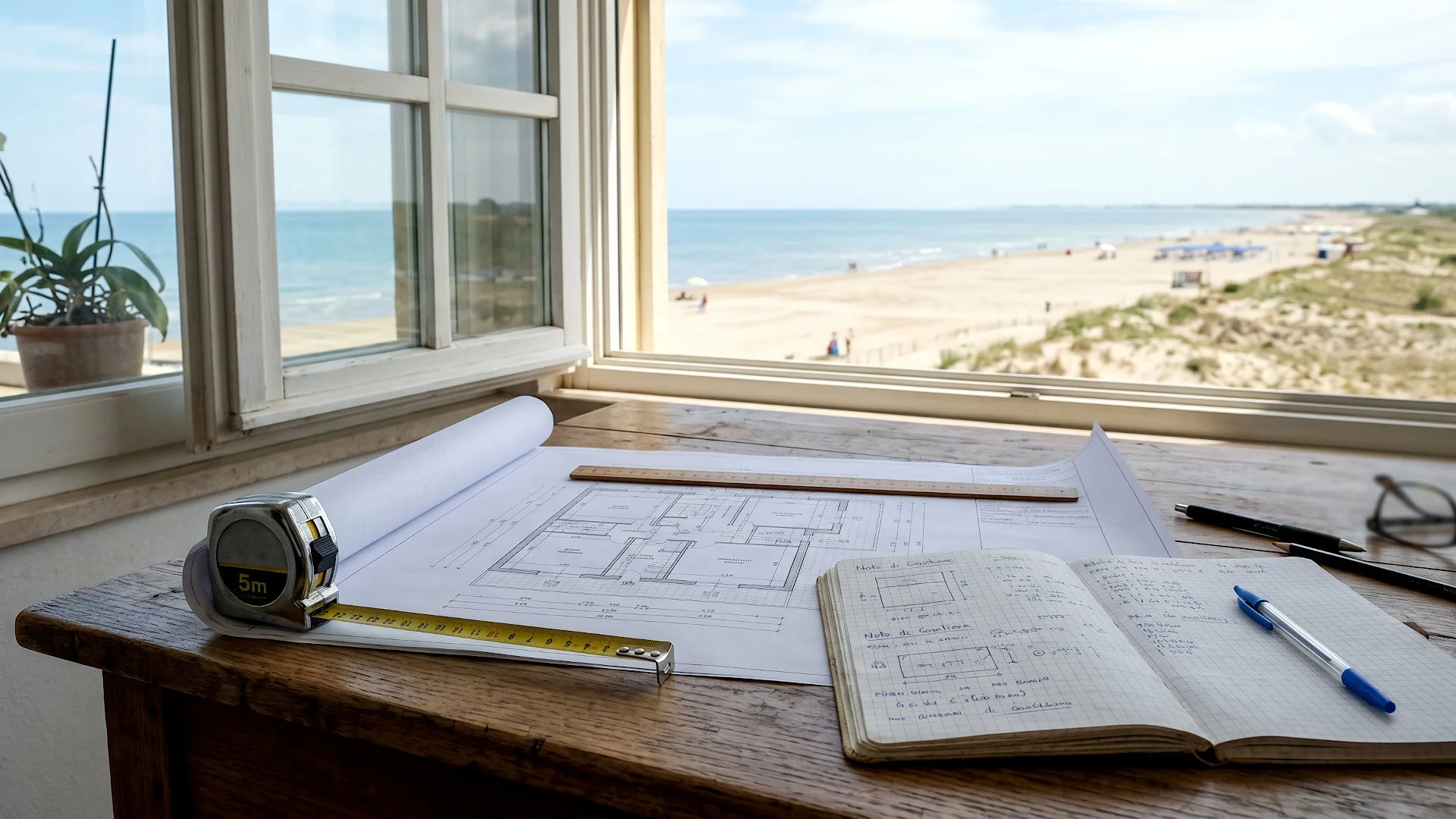
If the window runs from October to April and it is now November, you plan backwards. The home must be finished, cleaned and photographed before May, that is before the bylaw closes the door to new sites and before the guests of the season arrive.
Planning backwards for a home that is ready in April
November: inspection and priorities.
List what you want to change and separate what you need from what you would like.
Late November and December: technician and quotes.
The technician tells you which permit is needed; the firms quote on the same list of works.
December: decide what to pay before the end of the year. Decisive step
An expense paid in 2026 earns a 36% deduction; the same expense paid in 2027 earns 30%.
January: paperwork filed and building manager informed.
Before opening the site, notice to the Municipality and advance notice to the condominium.
January to March: the works.
This is the period with the most room for surprises.
April: closing, tests and documents.
System certificates, an updated energy certificate if needed, invoices and transfers in a single folder.
The most delicate point is the third. The deduction follows the cash principle: what counts is the year in which you pay, not the year in which the works end. If you have already decided on a job, a deposit paid in December under the right rules counts among the 2026 expenses.
Which works matter to tenants and buyers
Before the paperwork comes the choice. In a second home by the sea not all works weigh the same on a rental or a sale, and it is worth asking yourself who you are doing them for.
Some works are seen and felt as soon as someone walks in: a new bathroom, a new electrical system, windows that close properly, an air conditioner that cools in summer and heats in the shoulder seasons. Others stay hidden but appear in the documents: system compliance, the energy class, a building permit file in order.
On the energy class there is a useful figure, to be read with care. The FIAIP Monitora Italia report, produced with ENEA (the Italian energy agency) and I-Com and published by ENEA in March 2026, says that 91.44% of operators see an increase in the market value of energy-upgraded homes. The same report adds that the energy performance certificate is not yet a decisive factor in purchase choices, and that over 54% of sellers do not take it into account when preparing a sale.
In practice: energy efficiency helps value, but on its own it does not sell the home. It is better to fold it into a job you need anyway, such as redoing the systems, rather than turning it into a project of its own.
The energy performance certificate, the APE (attestato di prestazione energetica), is a document you need in any case. Legislative Decree 192 of 2005 requires it to be made available when negotiations start, both to sell and to rent. If the works change the systems or the windows, updating it at the end saves you from showing a buyer a document that describes a home that no longer exists. For a sale, the full list is in the guide to the documents you need to sell a house in Veneto.
Ordinary or extraordinary maintenance: the difference that decides the deduction
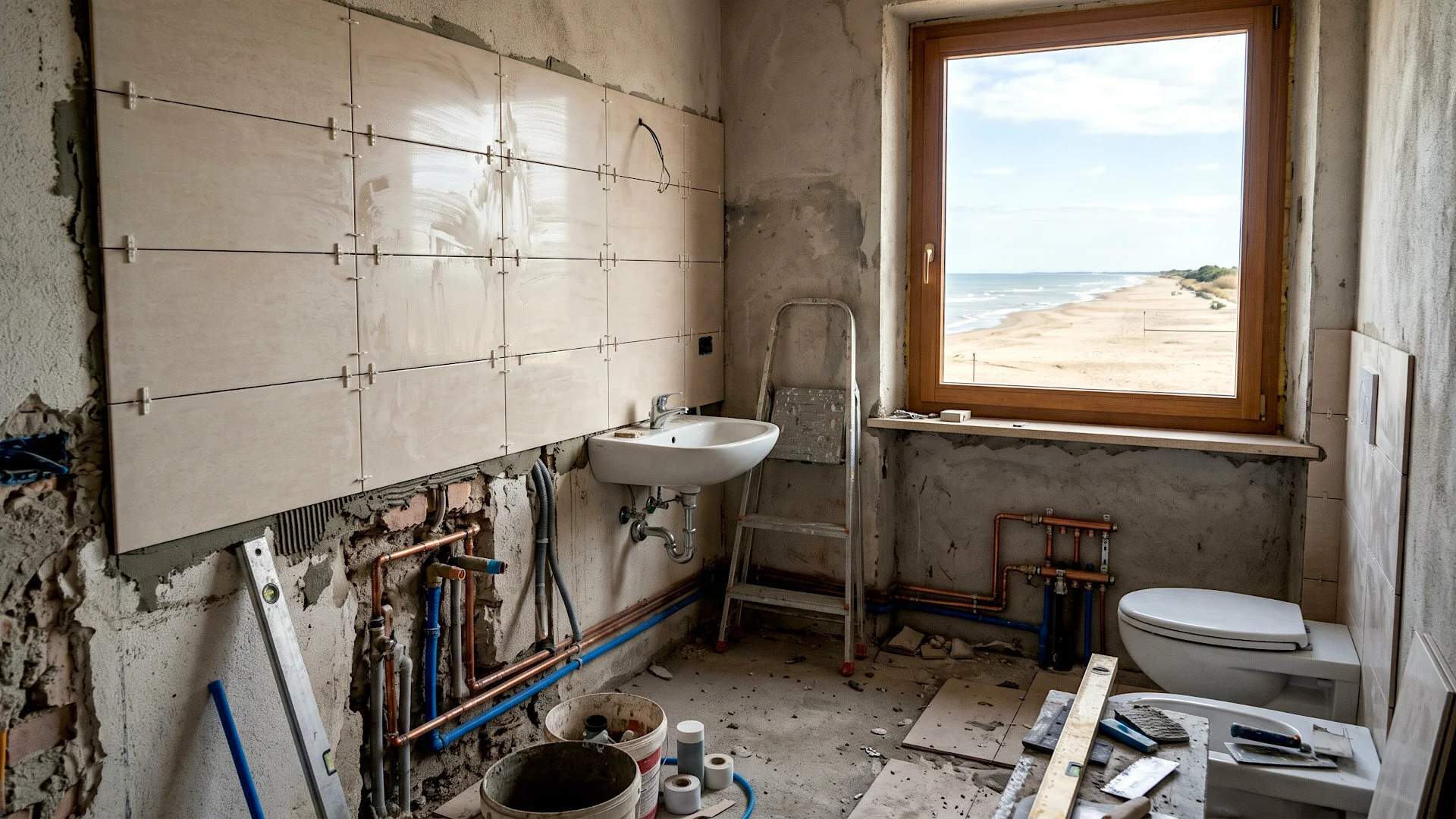
This is where much of the money is decided. The Agenzia delle Entrate (the Italian Revenue Agency) guide "Ristrutturazioni edilizie: le agevolazioni fiscali" is updated to February 2026. It says that on individual homes the deduction applies to the same works as on common parts, except ordinary maintenance. On your home, that leaves extraordinary maintenance, restoration and conservative rehabilitation, and building renovation.
The same guide gives examples that matter to anyone with a home by the sea. These are the works that count as ordinary maintenance, and so earn no deduction on the apartment.
- Replacing floors and repainting.
- Redoing interior plaster.
- Repairing balconies and terraces.
- Replacing windows and frames without changing the type of window.
Extraordinary maintenance, which does earn the deduction, includes creating and upgrading bathrooms, replacing internal partition walls and replacing windows with a change of material or type.
The last case deserves a concrete example. If you replace wooden windows with identical new ones, for the tax office it is ordinary maintenance. If you replace them with PVC or aluminium windows, the material changes and the job becomes extraordinary. Before signing the quote, ask your technician to put in writing how the work is classified.
There is also a rule that helps: when an extraordinary job also requires ordinary work, such as painting after a new bathroom, the guide refers to the absorbing nature of the higher category. In other words, the painting that is part of the larger job follows that job.
The 36% deduction in 2026, and why paying by December matters
For expenses incurred in 2025 and 2026, the Agency's guide sets two rates. The deduction is 50% for a home used as main residence by the owner or the holder of a real right. In all other cases it is 36%, with a spending cap of 96,000 euros per home. A second home by the sea falls into the other cases.
In 2027 the rates drop: 36% for the main residence, 30% in other cases, still on 96,000 euros. From 2028 to 2033 the deduction will be 30% for all homes, with the cap falling to 48,000 euros.
An example with round numbers shows how much the payment date weighs.
| Spending on extraordinary works | Paid in 2026 | Paid in 2027 |
|---|---|---|
| Rate for a second home | 36% | 30% |
| Total deduction on 40,000 euros | 14,400 euros | 12,000 euros |
| Annual instalment, for 10 years | 1,440 euros | 1,200 euros |
The deduction is split into ten equal annual instalments and is recovered from IRPEF, the Italian personal income tax: you therefore need an Italian tax bill large enough to absorb it, year after year. On this point your accountant in Italy is the right person to consult before signing.
Three points in the guide that are often missed:
- the deduction is also available to people who do not live in Italy, as long as they pay IRPEF: the guide speaks of taxpayers "resident or not in the territory of the State";
- since 2025, for anyone with total income above 75,000 euros, article 16-ter of the Italian income tax code caps the total of deductible expenses, and building expenses are included;
- also since 2025, replacing heating systems with single boilers fuelled by fossil fuels no longer qualifies for the deduction.
A final warning. The deduction for building renovation and the one for energy upgrades cannot be combined on the same expenses: for the same job you choose one, with the rules of that choice. Which suits your case is for your accountant to decide, on the real quotes.
The paperwork: the technician, the CILA and the Municipality
For many extraordinary maintenance works that do not touch the structure, the permit is the CILA (comunicazione di inizio lavori asseverata), a certified notice of start of works. Article 6-bis of the Italian Consolidated Building Act provides for it for works not included in the lists of articles 6, 10 and 22.
You send the notice to the Municipality, but a qualified technician signs it. The technician certifies that the works comply with the town plans and building regulations, and that they do not affect the structural parts. Heavier works need different permits, and the choice is the technician's.
That is why you call the technician before the building firms, not after. A quote prepared without knowing which permit is needed may leave out items the permit requires. And a wrong permit is a problem that surfaces precisely when you want to sell, during the notary's checks.
When a firm is on site, the Agency's guide also mentions the advance notice to the local health authority, in the cases where site safety rules require it. The technician and the firm know this step: just ask for it to be done and for a copy.
How to pay for the works without losing the deduction
A wrong bank transfer can cost the deduction even on a job done well. The Agency's guide is clear: you pay by bank or post office transfer, online too, showing the purpose of payment, the tax code of the person claiming the deduction and the VAT number of the firm.
Keep everything in a single folder, digital too: municipal permit, invoices, transfer receipts, any notice to ENEA. The deduction lasts ten years, and you need the documents for all ten. If one day you sell the home before the end, they are also the papers the notary and the buyer will ask to see.
In a residence or condominium: what to tell the building manager
If your home is in a residence complex, two rules of the Italian civil code apply. Article 1122 says that in your unit you may not carry out works that damage the common parts or the appearance of the building, and requires advance notice to the building manager, who reports to the owners' meeting.
Article 1117 lists the common parts, and the façades are among them. If your work affects the outside, for example windows of a different colour or design, talk to the building manager first. It is easier than redoing a contested job.
An email to the building manager with the site dates, the firm's name and the hours avoids arguments with neighbours. Ask also whether the condominium rules have their own provisions on using the lift, storing materials or the period of the works.
If instead it is the condominium's works that affect the common parts, each owner gets the deduction for their share in thousandths. The building manager issues a certificate with the year's expenses and your share: that is the document to take to your accountant.
Following the works when you live far from Eraclea
If you live in another region or another country, you see your holiday home only a few times a year. A winter site can still be followed, if you set it up that way from the start.
Agree with the firm on a fixed day each week for photos of the works, always from the same spots. Ask the technician to visit when something is closed up that will no longer be visible, such as the channels for the systems before plastering. Set the completion date in the contract, with April as the limit, and what happens if it slips.
Before leaving, secure the home for the months of the works: keys, meters, insurance. For the winter closing itself, the steps are in the checklist for closing a holiday home for the winter. And if you rent the home out, coordinate the works calendar with whoever manages it: in the holiday rental management mandate the availability dates are written down in black and white.
The checklist before opening the site
These are the things to have in hand before the first day of works. If one is missing, it is worth getting it now, while November leaves room.
Before opening the site in your holiday home
List of works split into ordinary and extraordinary
written by the technician, because it decides the deduction.
Building permit identified
CILA or another permit, with the technician who signs it.
Quotes on the same list of works
so you can really compare them.
Contract with dates and hours
completion by April, hours from the municipal bylaw.
Built-up area boundary confirmed
if the home is on the edge of Eraclea Mare.
Notice to the building manager
in writing, with dates and firm.
Accountant consulted
IRPEF capacity, cap above 75,000 euros of income, year of payment.
Renovation transfer ready
purpose of payment, tax code, firm's VAT number.
Document folder opened
permit, invoices, transfers, system certificates.
Energy certificate to update at the end
if systems or windows change.
A home renovated in winter is ready in April
In Eraclea Mare the works calendar is written by two rules. The municipal bylaw closes the door to new sites from May and to all sites in July and August. The deduction for a second home is 36% on 2026 expenses and 30% on 2027 expenses under current law; the 2027 Budget Bill, presented to the Italian Parliament on 30 October 2026, proposes 50% on the main home and 36% on other properties for 2027 expenses: the figures are confirmed when the law is passed, expected at the end of December. In between there are six useful months, from November to April, and this is the first.
If you want to understand which works weigh on the value of your home, to rent it or to sell it, ask ma.re.blu for a valuation through the contact page before calling the technician. We look at the home together and tell you where it makes sense to start. And if you are thinking of selling after the works, the guide on how to sell a holiday home without underselling it helps you set the timing.
If you are considering a home to renovate, look at the homes for sale in Eraclea Mare and the residences in the area.
Can building work be done in Eraclea Mare in summer?
In the built-up area of Eraclea Mare the Municipality's bylaw on civic activities prohibits all building sites from 1 July to 31 August, except emergencies and works authorised by the Municipality. From 1 May to 30 June and in September no new sites may be opened, and sites already under way may only carry out work comparable to ordinary maintenance. Real works are done between October and April.
How much is the tax deduction for renovating a second home in Italy in 2026?
For expenses incurred in 2026 on a home other than the main residence, the deduction is 36%, with a spending cap of 96,000 euros, in ten annual instalments. For 2027 expenses it drops to 30%. What counts is the year of payment, not the year the works end.
Does replacing the windows of a holiday home qualify for the deduction?
It depends on the new windows. According to the Agenzia delle Entrate guide, replacement without changing the type of window is ordinary maintenance, which earns no renovation deduction on an individual home. With a change of material or type it becomes extraordinary maintenance, and the deduction applies. The technician writes down the classification.
Do I need a permit from the Municipality to redo the bathroom?
Creating and upgrading bathrooms is extraordinary maintenance. For many works that do not touch the structure the permit is the CILA, provided for by article 6-bis of the Italian Consolidated Building Act, signed by a qualified technician and sent to the Municipality. The right permit for your case is decided by the technician.
How do I pay for the works without losing the deduction?
By bank or post office transfer, online too, showing the purpose of payment referring to building renovation works, the tax code of the person claiming the deduction and the firm's VAT number or tax code. On the transfer the bank applies an 11% withholding on account of the firm's taxes, since 1 March 2024.
Can someone who does not live in Italy get the deduction on a holiday home?
Yes, if they pay IRPEF in Italy: the Agenzia delle Entrate guide grants the deduction to taxpayers resident or not in the territory of the State. You do need an Italian tax bill large enough to absorb the annual instalments, and it is worth checking with an accountant before starting the works.