When an owner walks into our agency and tells me “Massimo, I want to sell fast”, I always answer with a question of my own: how fast, and at what price? A seaside home sells in a few weeks if you are willing to give it away. What almost every owner actually wants is something else: to close in a reasonable time without leaving tens of thousands of euros on the table.
I work on this every day on the Venetian coast, between Eraclea Mare, Jesolo and Caorle, and there is one scene I have seen repeat itself more often than I would like. Two almost identical flats, same holiday complex, same view. The first finds a buyer in two months at the right price. The second sits unsold for a year, loses three negotiations and in the end sells for less than it was worth at the start. What separated them was the method, and the method can be learned.
In this guide to selling property in Italy by the sea, I show you how the market for seaside second homes is moving today and how to read the value of your property. Then come the mistakes that drag out the timeline and the choices that shorten it. I bring you the official 2026 figures and what I see working on the ground.
How long it takes to sell a seaside home in Italy today
According to the Bank of Italy's quarterly housing market survey for the second quarter of 2026, it takes on average 5.2 months to sell a home in Italy. The average discount on the asking price is 7.1%. In the north-east, where Eraclea Mare lies, the discount falls to around 5%: here buyers negotiate, but not much, if the home is well presented.
That average blends two different stories. Homes priced sensibly sell sooner, while those that start out of line with the market sit still and, when they finally move, are discounted more. With the wrong price, time works against you.
Sales volumes complete the picture. According to the Italian Revenue Agency (Agenzia delle Entrate) and its property market observatory, the OMI (Osservatorio del Mercato Immobiliare), 766,757 homes changed hands in Italy in 2025. That is 6.4% more than in 2024, with the north-east growing at the same pace. In the second quarter of 2026 the market stopped racing and levelled off: over 201,000 homes sold (+0.1%), with the north-east stable (-0.1%).
The same data hold other numbers that matter to sellers more than you might think. Almost half of purchases (46.6%) are financed with a mortgage, at an average initial rate of 3.57%, and the share of buyers using the prima casa (first-home) tax relief stays close to 73%. A large slice of demand depends on the bank, and a bank only lends on a home whose paperwork is in order. How regular your documents are weighs on the sale as much as the price.
What a seaside home in Italy is really worth
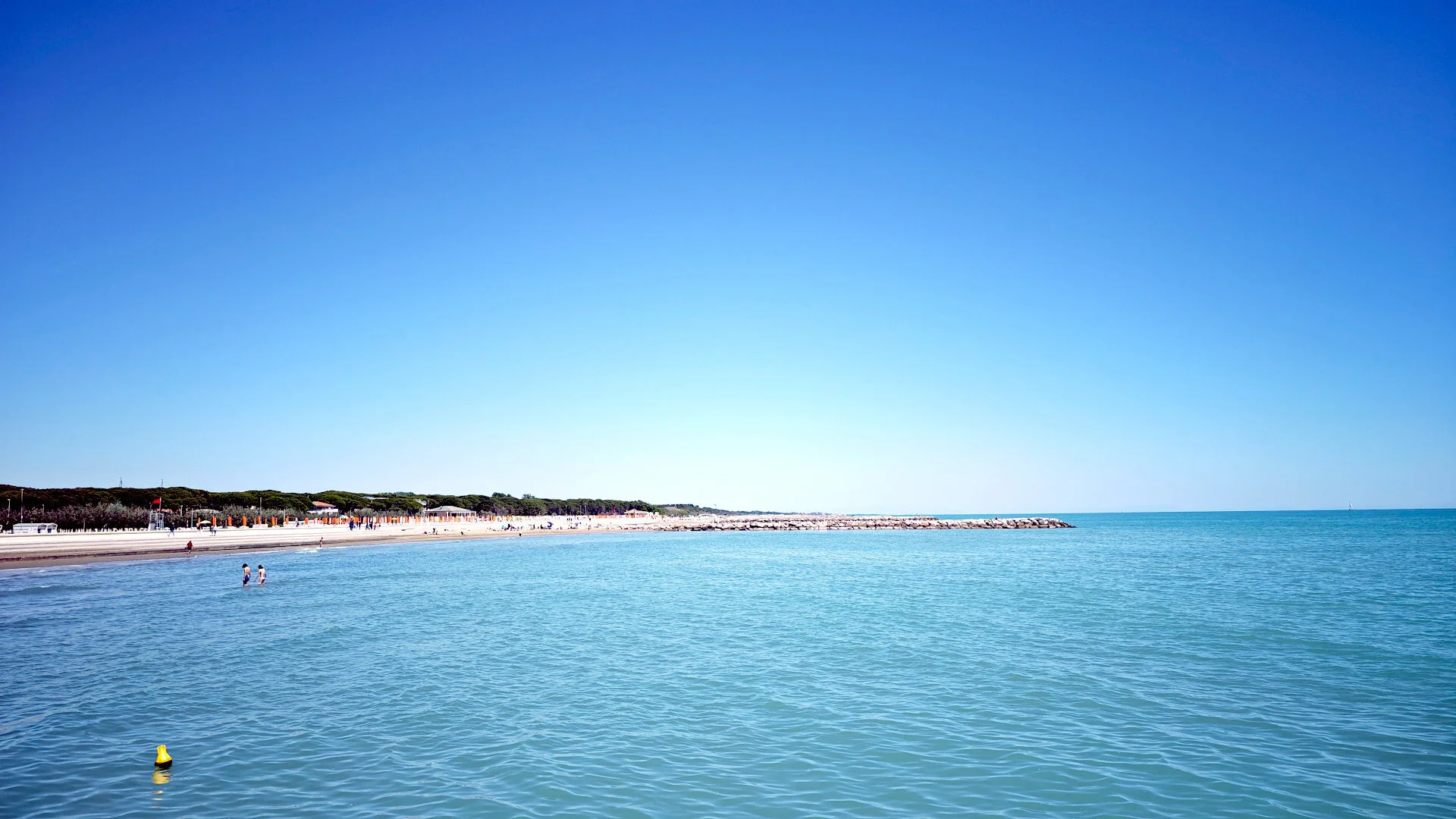
A seaside home is worth what an informed buyer is willing to pay for it today, in that location and in that condition. The price per square metre multiplied by the floor area gives you the frame. The value is decided by the details that show during a viewing and by the figures that hold up in negotiation.
The price per square metre is only the starting point
To get your bearings, start from the official data: the OMI quotations published by the Revenue Agency for the first half of 2026. In zone E6, Eraclea Mare, standard residential homes in normal condition are quoted at €1,700 to €2,000 per m², and those in excellent condition at €2,400 to €3,100, always on gross floor area.
These are broad ranges: they tell you which bracket you are in, not the price on your rogito (the notarial deed that completes a property sale in Italy). In the same building, in my experience, two trilocali (three-room flats, usually a living room and two bedrooms) can differ in value by as much as 15-20%. Floor, orientation, terrace and the real walking minutes to the beach all change. To move from the range to the value of your home you need an on-site valuation.
The factors that move the value of a second home
When I prepare a sale I always look at the same things, in this order. Each one can add or subtract thousands of euros from the final price, and the buyer checks all of them, even without saying so out loud.
The checks I make when I value a seaside home
Real distance from the beach
the minutes on foot, not the ones written in the listing. Buyers count them.
Orientation and light
a bright living room sells, a dark flat sits unsold.
Terrace or usable outdoor space
by the sea it counts as much as an extra room.
Parking space
in high season it is one of the first questions I get; a covered or owned space shifts the negotiation.
Energy class
in my experience, older, dated homes or those with poor energy ratings are the ones where buyers push for the biggest discounts.
What a home in Eraclea Mare should be compared with
This is where I see the most common strategic mistake. Owners selling in Eraclea Mare look at prices in the Eraclea hinterland and convince themselves their home is worth little. The hinterland is a different market: OMI quotes €850 to €1,050 per m² in Torre di Fine and €750 to €950 in Ponte Crepaldo, in normal condition.
Your home belongs in the coastal market, where buyers choose between Eraclea, Jesolo and Caorle. Again according to OMI, in the first half of 2026 Jesolo Pineta is quoted at €2,000 to €2,500 in normal condition and Jesolo Lido Est at €2,100 to €2,600. The beach area of Caorle stands at €2,400 to €2,800. In excellent condition, at Jesolo's Lido Est and Lido Ovest, prices reach €4,400 per m², against €3,100 in Eraclea Mare.
That gap is your selling point. Anyone looking at the Venetian coast who finds Jesolo too expensive or too urban gets the same sea in Eraclea Mare, with the pine forest and more quiet, at a lower entry price. Told this way, your home speaks to the buyer who compares prices along the coast before deciding.
The mistakes that drag out the time to sell
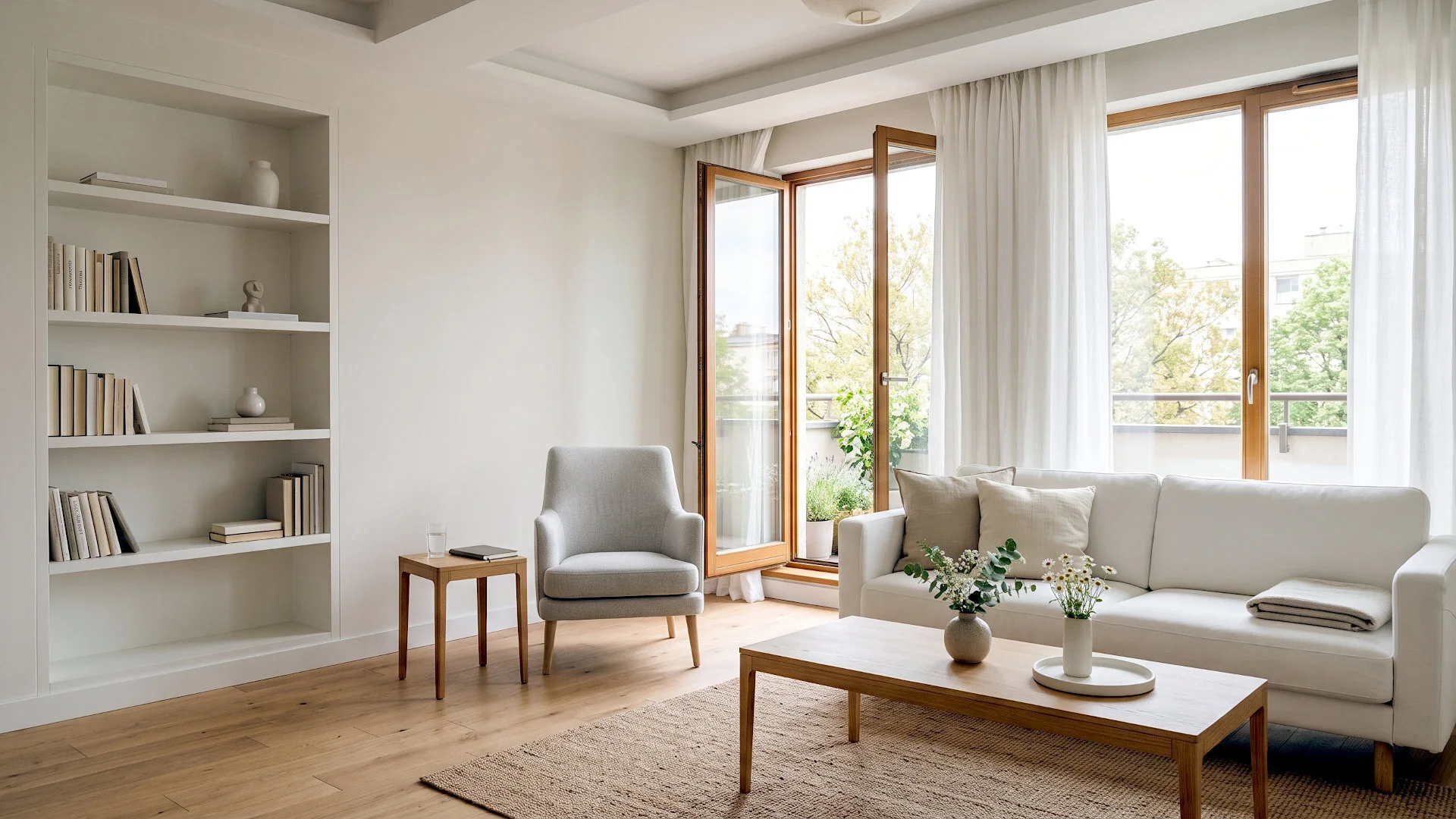
The timeline almost always stretches because of four avoidable mistakes: an asking price out of line with the market, weak presentation, documents prepared late and a home that is not ready for viewings. None of the four is down to luck, and each one can be fixed before the listing goes live.
The wrong asking price
“Let's start high, we can always negotiate.” It is the most expensive sentence I hear, and I hear it every week. An overpriced home burns through its first weeks online, when interest is at its peak. When you then cut the price, you arrive with a label attached: the home nobody wants.
Remember the average discount? 7.1% in Italy, around 5% in the north-east. It means buyers here will not follow you if you start well above the market: they compare, rule you out and move on. Getting the price right first time is the strongest lever you have on speed, far stronger than any later reduction.
Weak photos and an impersonal listing
Think of the last time you scrolled through a property portal. How long did you give each listing before deciding whether to open it? Someone looking for a seaside home does the same, in a few seconds. Dark photos taken in a hurry on a phone, unmade beds and lowered shutters tell them one thing only: this home has not been looked after.
A listing that works shows buyers what they are looking for: morning light on the terrace, the walking minutes to the water's edge, the parking space right outside. All it takes is care and good pictures.
Documents prepared late
It is the most underrated mistake and the most costly in terms of time. You find a buyer, you agree on the price, and then you discover that the up-to-date energy certificate is missing. Or that the floor plan held by the catasto (the Italian land registry) does not match the property as it actually is. The negotiation freezes for weeks, and sometimes falls through.
Anyone who wants to sell fast starts checking the documents before going online, while there is still time to put things right.
A home that is not ready for viewings
A second home that has been shut for months needs very little to feel welcoming again: fresh air, a good clean, a few fewer objects. Yet I still find myself showing a buyer into a lifeless flat, with the shutters closed and a musty smell. In those first ten seconds the visitor stops picturing themselves living there, and without that picture no offer comes.
How to shorten the timeline without lowering the price
Speed of sale comes from three things together: a correct valuation, technical preparation and professional presentation. A price cut is the tool of those who skipped these three. When I handle a sale on the coast I always start here, because this is what makes buyers choose one home among many.
Light-touch staging for a second home
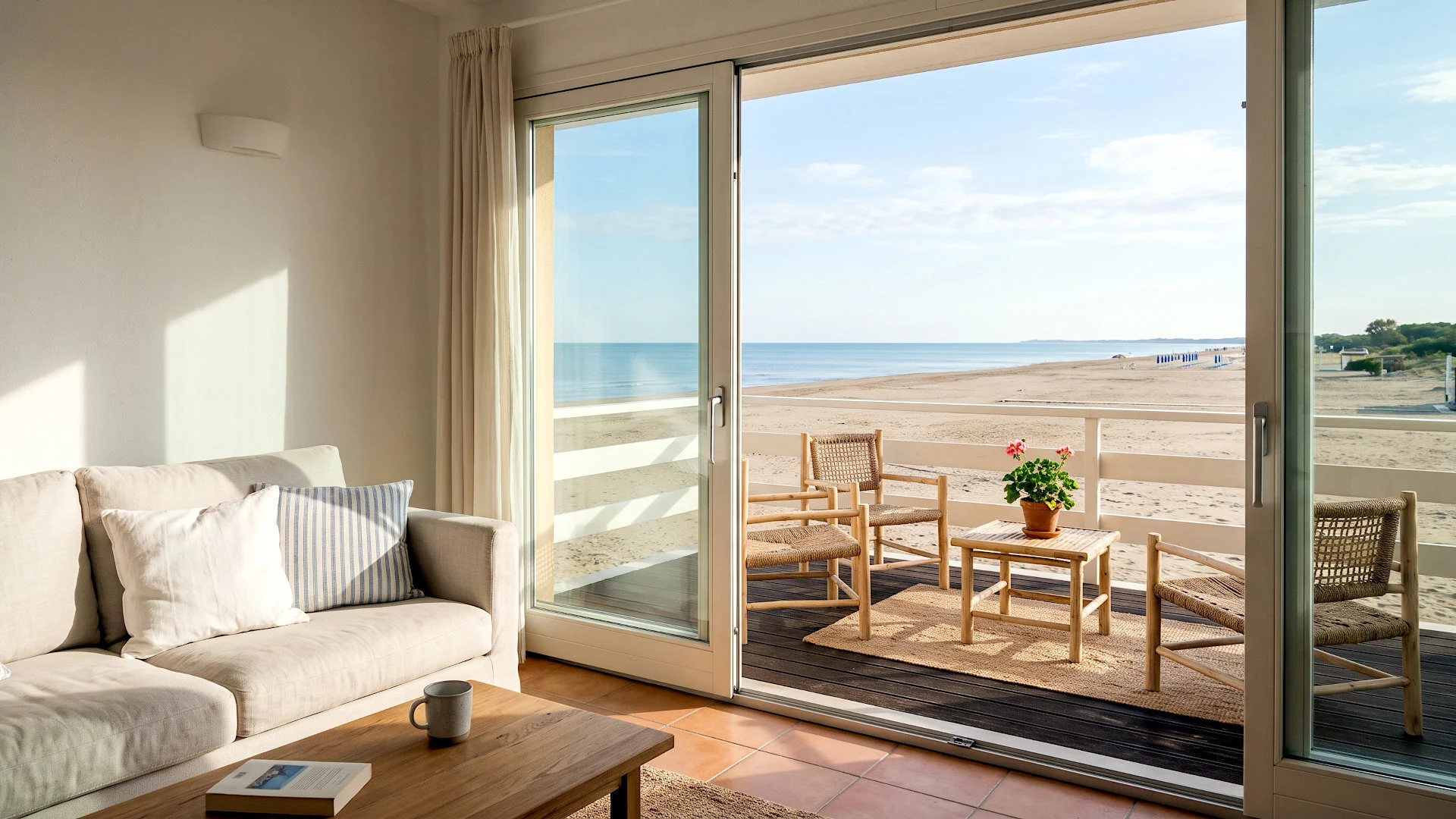
A seaside second home does not need building work. It needs staging that makes the rooms easy to read at first glance, with an almost hotel-like feel: clean linen, clear surfaces, a simply laid table on the terrace, rooms that breathe.
It costs little and works on the first impression. Faced with a home prepared like this, the buyer wonders what it would be like to spend next summer there. Help them picture it: that is where the offer comes from.
Professional photos, a short video and a clear floor plan
A photo shoot done in the right light changes the number of enquiries you receive. Add a short video that walks the buyer through the home and a clean floor plan, and the listing answers the buyer's questions even when you are not there.
For people buying from afar, and on the Venetian coast there are many of them, these materials are what it takes for your home to be taken seriously. Someone who cannot come and see it tomorrow must be able to understand it tonight, from their own sofa.
Who you are selling to: a family or an investor
Not all buyers want the same thing. There is the family that wants a quiet stretch of sea, close to amenities and the pine forest. There is the buyer who is thinking about the income from a summer let. The same home speaks to both with different accents, and deciding who you are addressing before you write the listing is half the work.
A trilocale facing the pine forest in Eraclea Mare, presented as a family holiday home, attracts one kind of buyer. The same flat, presented as an apartment to let in summer in an area where 62.5% of arrivals come from abroad, attracts another. Choosing the right story, and the right language, shortens the timeline.
A listing in your buyers’ languages
The Venetian coast lives on international tourism, and that changes the way you sell. According to the Veneto Region, in 2025 the Jesolo-Eraclea statistical area recorded 1.688 million arrivals (+2.5%), with 62.5% of them from abroad. The regional statistics group Jesolo and Eraclea together: the figure describes the area as a whole, not Eraclea alone.
The practical point stands. Some of the people who might buy your home do not speak Italian. A property sheet, a listing and first replies prepared in English and German as well widen your real audience, and whoever is ready in the buyer's language starts ahead.
The right moment to go on the market
On the coast, the month you publish in matters. If you get the home, the documents and the materials ready between late winter and spring, you catch buyers who want to purchase before the bathing season or in its first weeks. Eraclea Mare has held the Blue Flag since 2007, and in 2026 it is on the list again alongside Jesolo and Caorle: buyers already know what it means.
Being ready in March is worth more than chasing the market in August. It is a simple lever, and I see it overlooked all the time.
The documents to check before going online
Before you publish, three checks are needed: the energy performance certificate, with the data to show in the listing; the cadastral compliance of the property; and the tax position of the sale. Sorting them out in advance makes the difference between a negotiation that flows and one that stalls just when you thought you were there.
The APE and energy data in the listing
To sell a home in Italy you need an energy performance certificate, the APE (attestato di prestazione energetica). It is valid for a maximum of ten years, unless work is done that changes the property's performance. This is where many owners risk a fine without knowing it, because Legislative Decree 192/2005 requires the energy parameters to appear in sale listings.
A listing that looks good but is incomplete in legal terms is a risk you carry all the way to the rogito. Putting the APE in order before you start removes a problem and gives you credibility with the buyer.
Cadastral compliance: what you declare in the deed
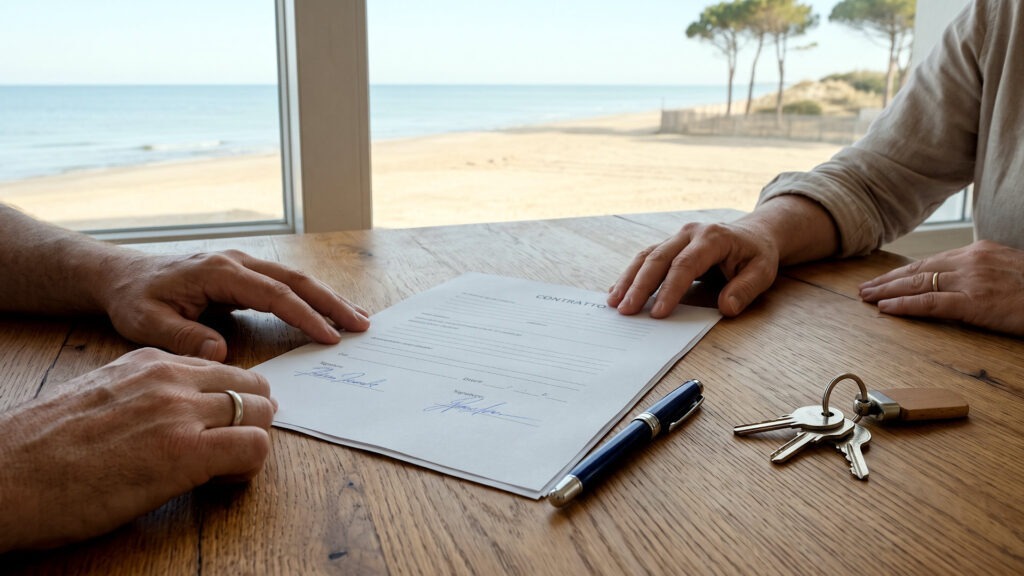
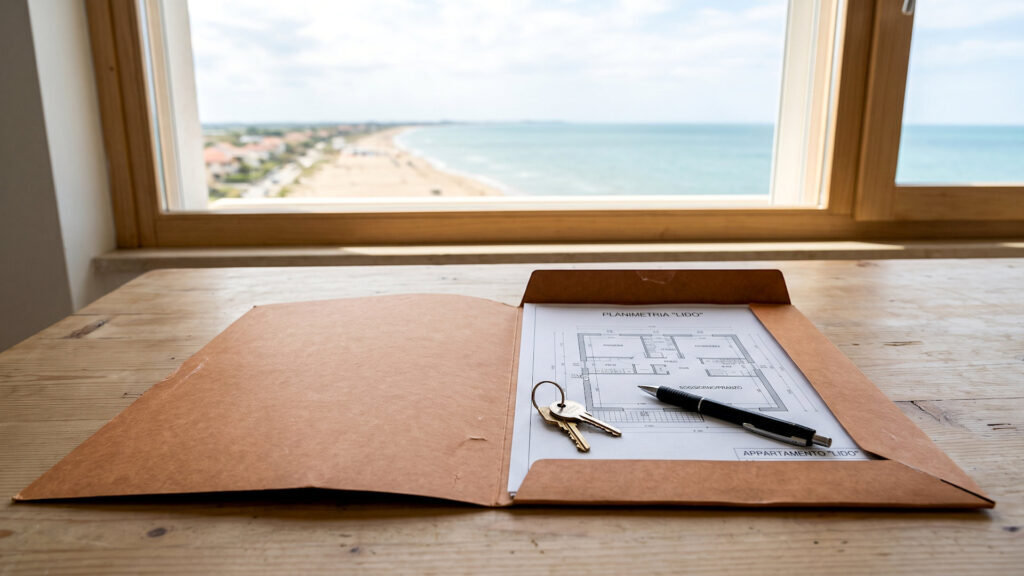
Cadastral compliance is a condition of the deed of sale. It is required by article 29, paragraph 1-bis, of Law 52/1985, added by Decree-Law 78/2010 (article 19, paragraph 14). In the deed you, as the seller, declare that the cadastral data and floor plans match the actual state of the property, or the deed is void.
The declaration can be replaced by a certificate from a qualified technician. The notary, a public official who draws up the deed in Italy, identifies the owners recorded at the catasto and checks them against the property registers. If over the years the home has had internal alterations never updated at the catasto, it pays to find out now, calmly, rather than when the sale seems done.
When tax changes whether the sale makes sense
On the tax side, three things matter: how long you have owned the home, whether it has been your main residence, and whether it has had Superbonus work. The Superbonus is an Italian tax incentive for renovation. More than once I have seen owners discover the question of the capital gain (plusvalenza) only in front of the notary, with negotiations already under way.
The capital gain may be taxed if you sell within five years of purchase or construction. In that case you can ask the notary to apply a 26% substitute tax directly at the rogito. As a general rule, properties received by inheritance are excluded, as are homes that were the main residence of you or your family for most of the time you owned them.
For homes with Superbonus work there is an extra rule: selling within ten years of the end of the work can generate a taxable capital gain. The specific case changes things a great deal, so the final check should be done with the notary or an accountant (commercialista), based on your property's history.
The sequence for getting ready to sell
When I prepare a sale I always follow the same order, because it avoids hold-ups and second thoughts. If you want to take the first steps on your own, start with the valuation, then carry on like this.
Six steps before you publish the listing
On-site valuation Key step
set a price consistent with the OMI zone, the micro-area and the real quality of the home.
Up-to-date APE
get the certificate and make sure the energy parameters appear in the listing.
Cadastral compliance
compare floor plans and the actual state of the property with the help of a technician.
Tax position
check it with the notary or accountant, especially if you are selling within five years of purchase or after subsidised building work.
Home and materials
cleaning, light staging, professional photos, a short video, a clear floor plan.
Launch window
publish between late winter and spring, in foreign buyers' languages too.
A step skipped now comes back later, when the negotiation is already open and every week counts.
How selling differs between Eraclea Mare, Jesolo and Caorle
Eraclea Mare, Jesolo and Caorle are three neighbouring markets, each with its own character, and the same home needs a different story depending on where it is. Eraclea Mare plays on its lower entry price and on nature, Jesolo is the largest and most urban market, and Caorle builds its value on its historic centre and its lagoon.
| Town and OMI zone | Normal condition | Excellent condition | Market character | How to present it |
|---|---|---|---|---|
| Eraclea Mare (E6) | €1,700-2,000/m² | €2,400-3,100/m² | Lower entry price, sea and pine forest, quiet | The same sea at a more affordable cost |
| Jesolo Pineta (E6) | €2,000-2,500/m² | €2,350-3,400/m² | The green part of Jesolo, with the pine forest | The most direct comparison for anyone selling in Eraclea Mare |
| Jesolo Lido Est (E4) | €2,100-2,600/m² | €3,300-4,400/m² | Upper bracket, urban, over 5 million overnight stays in the municipality in 2025 | Broad demand, strong competition |
| Caorle (Levante and Ponente beach area) | €2,400-2,800/m² | €3,100-4,300/m² | Town with a historic centre and a lagoon, average stay of 5.8 nights | Historic and lagoon appeal, loyal visitors |
Price source: Italian Revenue Agency, OMI quotations for the first half of 2026, standard residential homes, euros per m² of gross floor area (broad ranges, not sale prices). Tourism data: Veneto Region and Municipality of Jesolo, 2025.
If your home is in Eraclea Mare, its competitive edge lies in the balance between setting and price. The buyer you need is the one who looks at Jesolo, does the maths and looks for the same sea at a more affordable figure. That is who the listing should be written for.
A local agency, or managing the sale from a distance?
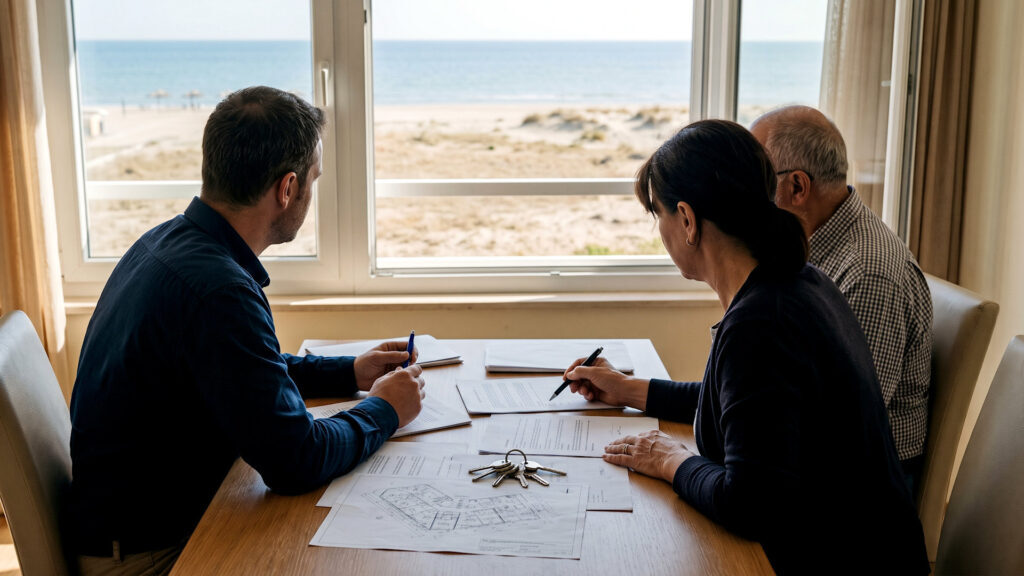
For a seaside home, relying on someone who knows the local market shortens the timeline and protects the price, especially if you live far from the coast. Selling on your own from afar is possible, with three drawbacks: viewings that are slow to arrange, a micro-area price that is hard to read and document checks that start late.
Most owners of seaside second homes do not live here. They live in Treviso, Padua or Milan, sometimes abroad. Handling calls, inspections, negotiations and paperwork from afar becomes a second job, and every postponed viewing is a buyer who looks elsewhere in the meantime.
You manage the sale from a distance
You pay no commission and decide every step, but the time and the travel are yours.
What you need
- someone you trust on site to open the home for every viewing request
- a price built on truly comparable homes, not just on national portals
- APE, land registry and tax position checked before you publish
You hand the sale to someone who works on the coast
You pay a commission, and in return someone on site opens the home, answers buyers and handles the paperwork.
What changes
- viewings are arranged even when you are not there
- the price comes from comparison with properties in the same micro-area
- document checks start before the listing goes live
The value of a home in Eraclea Mare is read by comparing genuinely similar homes, neighbourhood by neighbourhood and complex by complex. That is where a local reference makes the difference between a price plucked out of thin air and one that holds up in negotiation. Someone who sells on the coast all year round knows the typical buyers, their recurring questions and the real timescales of the area.
In short: how to sell fast without undervaluing your home
Selling a seaside home well in 2026 means entering the market with the right price, documents in order and a presentation that wins the buyer over in the first few seconds. Speed comes as a consequence of these three choices, and when the sale follows a method you are not forced to sell cheap.
I will put it to you the way I put it to the owners I meet in the agency. By the sea, the homes that sell well come in at the right price, tell the story of their setting well and are easy to choose, even from a distance. Owners who start high and then chase the market usually end up giving a bigger discount. The season, foreign demand and the right month to publish only work for you if you are ready.
The starting point is always the same: knowing what your home is really worth today, with the figures for your area in hand.
Request a personalised property valuation. We look together at your property, the quotations for your area and the strategy to sell it in a sensible time frame and at the right value.
Before you set the price, compare your home with those already for sale in Eraclea Mare and see how the residences in the area present themselves.
How long does it take to sell a seaside home in Italy in 2026?
On average it takes 5.2 months in Italy, according to the Bank of Italy's survey for the second quarter of 2026. That average contains two groups: homes priced well and ready for viewings sell sooner, while overpriced ones sit unsold and end up being discounted more.
How much do buyers negotiate on a seaside home in north-east Italy?
Not much. In the second quarter of 2026 the average discount on the asking price was 7.1% in Italy and around 5% in the north-east (Bank of Italy). With such a narrow margin, if you start above the market the buyer does not negotiate: they compare other homes in the same bracket and move on.
Which documents do you need before listing a property for sale in Italy?
Three checks are needed. The first is the energy performance certificate (APE), with the indicators to show in the listing. Then cadastral compliance, which you declare in the deed on pain of nullity, and your tax position, if you are selling within five years of purchase or after Superbonus work. Preparing them in advance stops the negotiation stalling once you have found a buyer.
What is the fine if a listing does not show the APE data?
You risk a fine of €500 to €3,000, under Legislative Decree 192/2005. If there is no APE at all in the sale, the fine ranges from €3,000 to €18,000. The certificate is valid for up to ten years, unless work is done that changes the home's energy performance.
When should you put a seaside home in Italy on the market?
It pays to be ready between late winter and spring, before the bathing season. Owners who have the home, documents and materials in order during those months catch buyers who want to close before summer, when interest in the coast grows.
What is a home in Eraclea Mare worth compared with Jesolo and Caorle?
According to OMI quotations for the first half of 2026 (standard residential homes, gross floor area), Eraclea Mare ranges from €1,700 to €2,000 per m² in normal condition. In excellent condition it ranges from €2,400 to €3,100. Jesolo Lido Est is quoted at €2,100-2,600 in normal condition and €3,300-4,400 in excellent condition, the Caorle beach area at €2,400-2,800 and €3,100-4,300. Condition for condition, Eraclea Mare costs less, and that is its selling point.