
“I already have a buyer: the neighbour from the next beach umbrella, who knows the flat well. What do I need an agency for?” Owners ask me this often, with the honesty of someone who does not want to offend. On one point they are right: Italian law does not require you to go through an estate agent to sell your home.
Then, as a rule, we list what would be left to do on your own. The price, the paperwork, the written offer, the statements to the notary, the guarantee towards the buyer. None of these disappears if there is no agent: it all passes to you.
I am an estate agent myself, and my interest is plain to see. So in what follows it is mostly the law that speaks: the duties Italian law places on the agent and those that stay with the seller, article by article. You will also find the cases in which selling on your own works, and the rest is your decision.
Can you sell a second home in Italy without an estate agent?
Yes. No rule requires a broker in the sale of a home: you can find the buyer, negotiate and reach the notary on your own. What changes is who carries the work and the responsibilities: valuation, listing, documents, offer, statements in the deed. With an agent, some of these are done by the agent, and the law requires them to be done under precise rules.
The difference is easier to see item by item. This is the table I show anyone who asks me whether they would be better off doing it themselves.
| What you need to sell | If you sell on your own | If you use a registered agent |
|---|---|---|
| Asking price | You set it, usually from the property portals | The agent proposes it from comparable homes; you decide |
| Listing with the energy class | You are liable: €500 to €3,000 if the data are missing | Whoever publishes the listing is liable |
| Viewings and enquiries | You handle them, even from a distance | The agent handles them on site |
| Document checks before the offer | You organise them with a surveyor | The agent starts them; a surveyor is needed anyway |
| Relevant information about the deal | You give it, in good faith | The agent must also disclose what they know |
| Identifying and checking the clients | The notary does it at the rogito | The agent does it when you sign the mandate, then the notary |
| Offer and deposit | You write them or have them written | The agent uses forms filed with the Chamber of Commerce |
| Guarantee against defects towards the buyer | Stays with you | Stays with you |
The last row is the one that surprises people most, and I come back to it further on. First it is worth understanding what the law asks of the agent, because that is where you see what the commission actually buys.
What an estate agent in Italy must do by law

Under the Italian Civil Code (codice civile), the estate agent is a mediatore, a broker: someone who puts two or more parties in contact to conclude a deal. The broker is not bound to either of them by ties of collaboration, employment or representation (article 1754). Their job is to bring the agreement about, and the law gives them duties towards both parties.
The first duty is to inform. Article 1759 says the broker must disclose to the parties the circumstances known to them concerning the valuation and the security of the deal that may influence whether it is concluded. If I know of a discrepancy with the approved plans, a mortgage on the property or a problem on the buyer's side, I have to tell both you and the buyer.
The same article adds a detail few people know. The broker is answerable for the authenticity of the signatures on the documents that pass through their hands. When I bring you a signed offer, I answer for the fact that it was really signed by the person who says they signed it.
Registered, trained and insured
Law 39/1989 regulates who can do this job. To register you need a secondary-school diploma, a training course and an exam that assesses professional competence, or twelve months of practice with a specific course. It is a path designed for people who handle other people's homes, with their paperwork and their risks.
The compulsory professional indemnity insurance has a minimum level of cover set by the Ministry, as reported by the Chamber of Commerce of Bologna. It is €260,000 for sole traders, €520,000 for partnerships and €1,550,000 for limited companies. When you ask about the policy, ask about the level of cover too.
The same law forbids the agent from brokering in situations of conflict of interest (article 5). Registration in the REA (the economic and administrative index of the Chamber of Commerce), the penalties for working without it, filed forms and the clauses of the mandate are covered in the article on a sole mandate or several agencies.
One more check: anti-money laundering
There is one duty the market sees little of. Registered estate agents are obliged entities under the anti-money laundering rules (Legislative Decree 231/2007, article 3). When they take on a mandate they must identify the client and the beneficial owner and assess the purpose and nature of the transaction (articles 17 and 18).
They must then keep the documents collected. If they know, suspect or have reasonable grounds to suspect that the funds come from illegal activity, they report it to the UIF, Italy's Financial Intelligence Unit, before carrying out the transaction (articles 31 and 35). The notary is an obliged entity too, so there is always a check at the rogito, the notarial deed that completes the sale. With an agent, the check starts when the mandate is signed, before the rogito.
What stays with the seller, with or without an agent
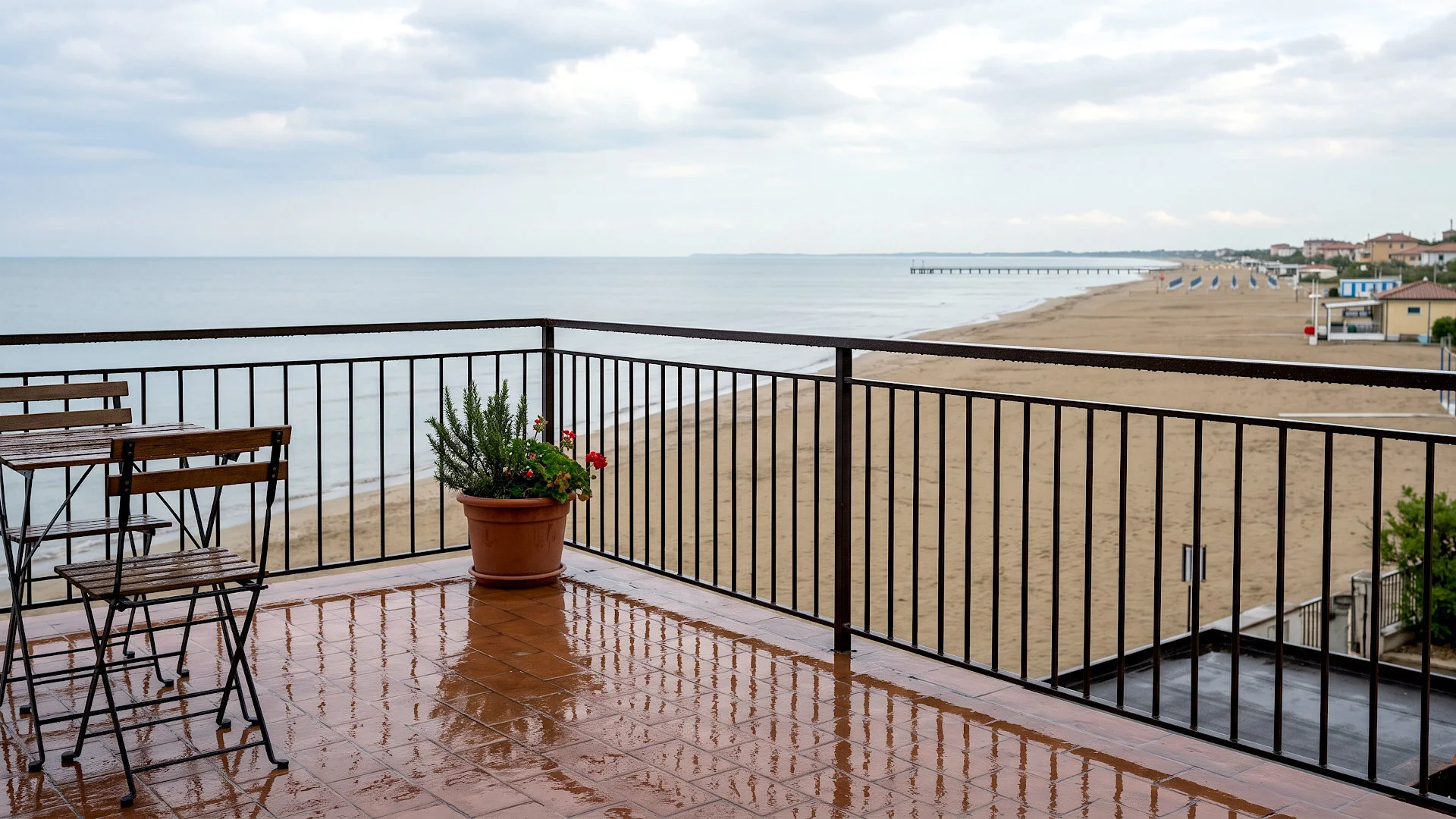
The owner who sells is answerable for the home they hand over, whoever found the buyer. The guarantee against defects belongs to the seller (article 1490 of the Civil Code): the home must be free of defects that make it unfit for use or noticeably reduce its value.
If there are defects, the buyer can ask for the contract to be terminated or for a reduction in the price (article 1492). They must report the defects within eight days of discovering them, and the right of action expires one year after handover (article 1495).
For charges or third-party rights that are not apparent and not declared in the contract, a buyer who did not know of them can ask for termination or a price reduction (article 1489). If the qualities promised, or the essential ones, are missing, they can ask for termination, within the same time limits as for defects (article 1497).
The law excludes the guarantee for defects the buyer knew about or that were easily recognisable (article 1491). There is an exception that carries weight: if you state that the home is free of defects, the guarantee applies again, even to defects that were easy to spot. A sentence said to reassure someone during a viewing can cost you dearly if it ends up in the contract.
With seaside second homes this point is very real. A home opened for a few weeks a year hides its flaws well: water seeping in from the terrace shows up after the autumn rain, and a system left off for months is found out the first time it is switched on. An owner selling from far away often does not even know. My advice to everyone is to put in writing what you know, before the offer.
The sensitive points of a private sale
When a private owner sells alone, problems usually arise in five places. None is insurmountable, but each has a precise rule behind it, and it pays to know it before you publish the listing.
The home's paperwork. The deed is void if it lacks the statement of cadastral compliance (Law 52/1985, article 29) or, for buildings begun after 17 March 1985, the details of the building permit (Presidential Decree 380/2001, article 46). The cadastral statement can be replaced by a certificate from a qualified surveyor. The full list, with the timescales of the Municipality of Eraclea, is in the guide to the documents for selling a second home in Veneto.
The listing. Anyone who publishes a sale listing must show the energy performance indicators and the energy class of the home (Legislative Decree 192/2005, article 6). If they are missing, the person responsible for the listing risks a fine of €500 to €3,000. When you sell on your own, that person is you.
The offer. An offer written in a hurry, with no mortgage condition or with an unclear deposit (caparra), is among the things I most often see end up in dispute. I have written about it in the guide to the purchase offer for a second home, which also applies to sellers.
The price. The public reference for value is the quotations of the OMI (Osservatorio del Mercato Immobiliare), the property market observatory of the Italian Revenue Agency. They give a range for each area, though, not the value of your home. For how to read them properly, see the article on what a home in Eraclea Mare is really worth.
The unregistered go-between. It happens that an acquaintance introduces the buyer and then asks for a fee. The law is clear: only registered agents are entitled to commission (Law 39/1989, article 6). Anyone brokering without registration also risks a penalty, which you will find in the article on the mandate.
What an agent costs and when the commission is paid
The commission is the broker's fee. The Civil Code ties it to a result: it is owed by each party, if the deal is concluded as a result of the broker's involvement (article 1755). Time spent, viewings and promotion give no right to commission if the deal is not concluded.
I will not give you a percentage: it is agreed case by case and must be written into the mandate, together with who pays it. How the amount is set and when expenses are reimbursed I explained in the article on the mandate.
One rule here avoids many arguments in sales that depend on a mortgage. If the contract, for example the preliminary contract (preliminare or compromesso), is subject to a condition precedent such as obtaining the loan, the right to commission arises when the condition is met (article 1757). If the condition is a condition subsequent, its occurrence does not cancel the commission.
The commission is declared in the deed
At the rogito, seller and buyer sign a sworn statement (dichiarazione sostitutiva). According to the Italian Revenue Agency (Agenzia delle Entrate), it must state whether a broker was involved and, if so, their details, VAT number, REA registration and the brokerage costs with the method of payment. The notary reports to the Revenue Agency any agents who turn out not to be registered.
Keeping quiet about the broker to save a little on taxes is a very bad idea. If the statement is omitted, incomplete or false, a fine of €500 to €10,000 applies. On top of that, for the purposes of registration tax (imposta di registro), the value of the home can be reassessed (Decree-Law 223/2006, article 35). I tell owners this before we even talk about price.
When selling on your own can really work
There remains a strong argument for doing it yourself: the commission is a concrete sum, while the problems are only possible. It is a serious argument, and there are sales in which the agent adds little.
Selling on your own works when the buyer is already there, like the beach-umbrella neighbour from the start, and the price has been agreed. It helps a lot to live near the home, so you can deal with the surveyor, the building manager and the notary without taking time off work, and to have the documents in order on a home without a complicated building history. In these cases a notary chosen in good time and a surveyor for compliance cover most of what is needed.
Things change when one of these elements is missing. If you live in Padua or Milan, let alone abroad, every viewing is a journey. If the buyer still has to be found, you need someone to find and check them. If the home has an enclosed veranda or an extension from the 1980s, you need someone to put the paperwork in order before the notary does. Here are the two routes side by side.
You sell privately
You pay no commission and decide every step, but the work and the checks are all yours.
What you need
- a buyer already found, or the time to look for one
- a surveyor for cadastral compliance and building permits
- a listing with the energy class, for which you are liable
- a well-written offer and a notary chosen in good time
If you live far away
You use a registered agent
You pay a commission agreed in writing, which is only earned if the deal is concluded as a result of the agent's involvement.
What you get
- a professional obliged to tell you what they know about the deal
- a professional indemnity policy that protects clients
- checks on the clients from the moment the mandate is signed
- viewings and enquiries handled on site even when you are not there
The guarantee towards the buyer, as you have seen, stays with you in both cases. That is why the real choice is about how much work you want to do yourself and how much control you need before signing, not about final responsibility. Price, photographs and timing on the market are another chapter: you will find them in the guide on how to sell a seaside home without underselling it.
How to choose the agent to handle your sale
If you decide to use an agent, the first meeting is more for you than for them. In half an hour you can tell whether they know the area, whether they work methodically and whether they are properly registered. The right questions are few, and a well-prepared agent answers them without beating about the bush.
The questions to ask at the first meeting
What they already know about the home
which checks they make before the listing and how they tell you what comes to light.
Level of insurance cover
whether it reaches at least the minimum required for their type of business.
Conflicts of interest
whether they have ties with anyone who might buy your home.
Client checks
how they carry out anti-money laundering due diligence and what they will ask you to document.
Commission and conditions
when it is earned if the sale depends on a mortgage.
Statements for the deed
who prepares the broker's details and the costs for the statement at the rogito.
Signatures on offers
how they collect and check the signatures they bring you.
For registration, filed forms, duration and withdrawal, you will find the full list in the checklist of the article on the mandate. Always ask what paperwork the price you are offered is based on. A precise answer to these questions is worth more than any presentation, ours included: if an answer does not convince you, ask for it in writing.
Decide with the paperwork in hand
You can sell a seaside second home in Italy on your own, and in some cases it pays. Before deciding, though, it is worth knowing what the law asks of the agent and what stays with you regardless: the guarantee against defects, the statements in the deed, responsibility for the listing. With these points clear, the commission becomes an item to weigh against the work and the checks it saves you.
Request an introductory meeting at our agency in Eraclea Mare about selling your home. We look together at the documents you have, tell you what is missing and explain how we would work, commission included. If in the end you prefer to sell on your own, you leave the meeting with the list of things to do.
An agency's work shows in how it presents things: look at the homes for sale and the residences in the area.
Can you sell a house in Italy without an estate agent?
Yes, no rule requires you to go through a broker. If you sell on your own, you take on the price, the listing with the energy class, the documents, the offer and the statements in the deed. The guarantee against defects towards the buyer stays with the seller in every case, with or without an agent.
When is the estate agent's commission paid in Italy?
The Civil Code recognises the commission if the deal is concluded as a result of the broker's involvement (article 1755). If the contract, for example the preliminary contract, is subject to a condition precedent such as the mortgage, the right arises when the condition is met (article 1757). The amount and the timing must be written into the mandate.
What duties does an estate agent in Italy have towards the seller?
They must disclose to the parties the circumstances they know of concerning the valuation and the security of the deal (article 1759 of the Civil Code). They must be registered in the companies register or the REA (Law 39/1989 and Legislative Decree 59/2010), hold a professional indemnity policy and not work in a conflict of interest. They are also an obliged entity under anti-money laundering rules.
Is a private seller in Italy liable for defects?
Yes, the guarantee against defects belongs to the seller (article 1490 of the Civil Code), with or without an agent. The buyer can ask for termination or a price reduction, reporting the defects within eight days of discovering them; the right of action expires one year after handover. An agreement excluding the guarantee is not valid if the defects were concealed in bad faith.
Do you have to declare the estate agent in the Italian deed of sale?
Yes. In the sworn statement made at the rogito, the parties state whether a broker was involved, their details, their REA registration and the brokerage costs with the method of payment. If the statement is omitted or false, the fine is €500 to €10,000, and the value can be reassessed for registration tax purposes.
How do you check that an estate agent in Italy is properly registered?
You check their registration in the companies register or the REA of the Chamber of Commerce. Then you ask which company insures them and whether their offer and mandate forms have been filed. Only registered agents are entitled to commission (Law 39/1989, article 6).