Every spring someone walks into our agency dreaming of a seaside home that pays its way. They often bring the same line with them: “I was told that with a flat in the pine forest the rent covers the mortgage.” It is almost never as true as it sounds. Eraclea Mare does earn, but between the gross income and what you actually keep there is a gap that few people describe in full.
To avoid being dazzled you need the whole calculation, from the first week let to the last euro of cedolare secca, the Italian flat-rate tax on rental income. In this article I work it out for a trilocale (a three-room flat: a living room and two bedrooms) in a residence, a holiday complex with shared facilities. I follow it week by week and item by item, all the way to the 2026 taxes. It is an example, not an average, with every assumption written out, so you can redo the sums with the figures for your own home. By the end you will know where the profit is made, where the margin is lost and whether this kind of buy to let in Italy makes sense for you.
Why look at Eraclea Mare: the entry price of the “Perla Verde”
Eraclea Mare has a measurable advantage: getting in takes less capital than on Jesolo's Lido or in the beach area of Caorle. That comes from the OMI quotations of the Agenzia delle Entrate, the Italian Revenue Agency, whose property market observatory (OMI, Osservatorio del Mercato Immobiliare) publishes official price ranges. That you earn more here, on the other hand, no official figure measures, because nobody records short-let income zone by zone.
The context gives the scale. The eastern Veneto coast receives around 22.7 million overnight stays a year: 22.74 million in 2024 and 22.69 million in 2025 (Veneto Region, Statistics Office). The count adds up five municipalities: Cavallino-Treporti, Jesolo, Eraclea, Caorle and San Michele al Tagliamento with Bibione, one of Italy's main beach districts.
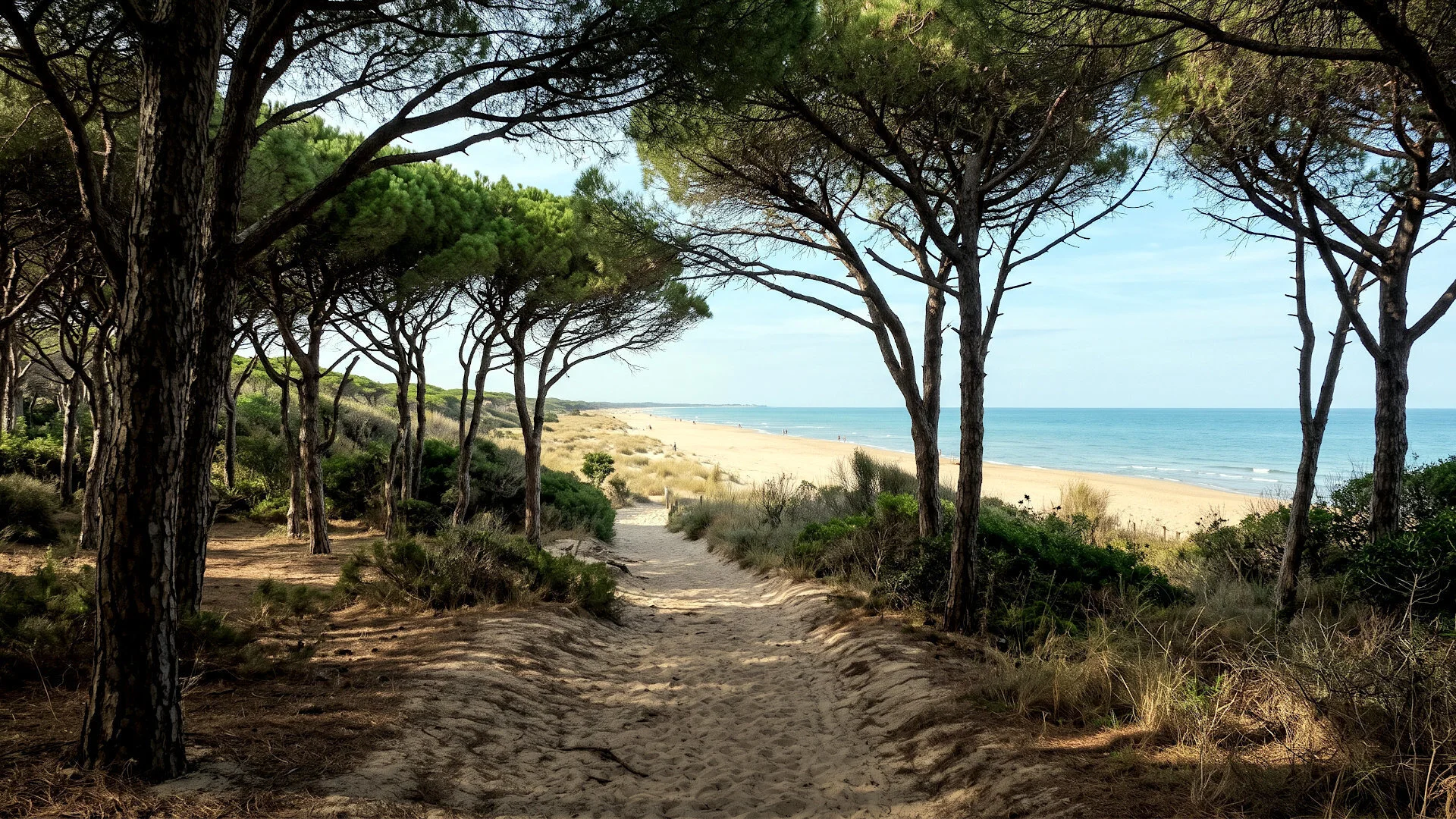
Within this flow Eraclea carves out a niche of its own. Here I do not sell nightlife and big numbers: I sell a slow pace, the shade of the pines and families spanning several generations, grandparents and grandchildren in the same flat. In our experience these are loyal guests who come back every year, and that lowers marketing costs. The shoulder weeks, in June and September, still need more work on prices and listings.
Eraclea, Jesolo or Caorle: where it costs less to enter the market
For the same goal, Eraclea Mare is the most accessible way into the Veneto coast. According to OMI, in the first half of 2026 a home in normal condition in Eraclea Mare is worth €1,700 to €2,000 per m², while Jesolo Lido and the beach area of Caorle start higher.
| Town and OMI zone | Normal condition (€/m²) | Excellent condition (€/m²) | Tourism profile | Entry capital |
|---|---|---|---|---|
| Eraclea, E6 Eraclea Mare | 1,700-2,000 | 2,400-3,100 | Family, loyal, slow pace | Lower |
| Jesolo, E4 Lido Est | 2,100-2,600 | 3,300-4,400 | Cosmopolitan, nightlife, high density | High |
| Jesolo, E3 Lido Ovest | 2,400-3,000 | 3,500-4,400 | Cosmopolitan, nightlife, high density | High |
| Caorle, Levante and Ponente beach area | 2,400-2,800 | 3,100-4,300 | International, historic centre nearby | High |
Source of the quotations: Italian Revenue Agency, property quotations database (OMI), first half of 2026, standard residential homes, € per m² of gross floor area. The tourism profile is our own reading as an agency.
A lower entry capital means less money tied up and, for the same floor area, a smaller mortgage. Whether the home then earns more in percentage terms depends on how much you take in, and OMI does not publish rents for these zones. That is why, instead of an average, you will find a calculation below. If you want a comparison of values in the micro-area, here is our analysis of prices in Eraclea compared with Jesolo.
Income and costs of a two-bedroom flat: an honest breakdown of one season

In our example a two-bedroom flat in a residence with a pool in Eraclea Mare takes in €10,800 gross over one summer season. Around €6,100 of running costs come out of that figure, before any tax. This is where the promise of paying the mortgage with the rent starts to creak.
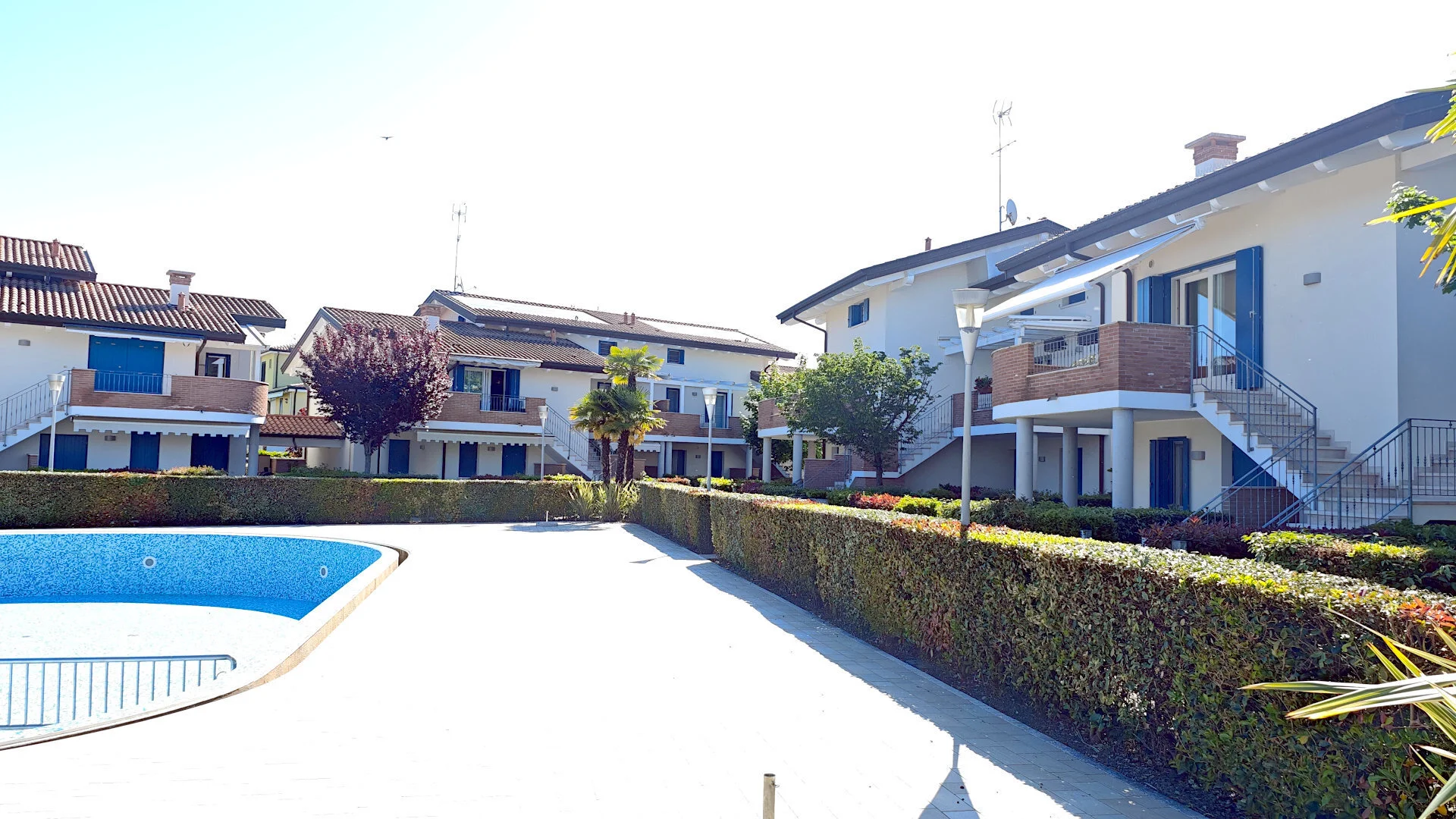
I am working on a concrete case, the type of property I handle most often: a mid-sized trilocale in good condition, in a residence with a pool near the pine forest. I assume around 80 m² gross at €220,000, that is €2,750 per m², within the OMI range for excellent condition in Eraclea Mare.
Anyone who looks only at the price gives little thought to the purchase costs, which in fact change a great deal depending on who is selling to you. In the example you buy from a private seller, and for the notary and the agency fee I add around another €9,000, as an assumption.
Buying from a private seller
You pay 9% registration tax (imposta di registro) on the cadastral value, plus €50 mortgage tax and €50 cadastral tax.
In the example
- cadastral income (rendita catastale) of €520
- cadastral value: 520 × 1.05 × 120 = €65,520
- taxes: around €6,000
Buying from a company
This applies if the company built or renovated the property less than five years ago: you pay 10% VAT (IVA) on the price.
On the same price
- VAT: €22,000 on €220,000
- registration, mortgage and cadastral tax: €200 each
Buying from a private seller, the total capital invested comes to €235,000: €220,000 for the price, around €6,000 in taxes and around €9,000 for the notary and the agency fee. This is the base on which I measure the return further on.
If you are just starting out and need the full picture of the process, from choosing the property to managing the lets, I have written a dedicated guide to renting out a holiday home in 2026. Here I stick to the numbers.
The income: how you get to €10,800 in one summer
Seasonal income is built on strongly seasonal rates. From our 2025 listings, a week in early June or mid-September lets for €315 to €450, while the weeks around Ferragosto, the 15 August holiday, rise to between €1,200 and €1,500.
For July and the August weeks away from Ferragosto I have no recorded rate to give you. In the example I use €1,000 a week, a midpoint between the two bands, and I treat it for what it is: an assumption. Here is the calculation over 12 weeks let between June and mid-September.
| Period | Weeks | Weekly rate | Income |
|---|---|---|---|
| June and September (low season) | 4 | €450 | €1,800 |
| July and August, away from Ferragosto | 6 | €1,000 (assumption) | €6,000 |
| Around Ferragosto | 2 | €1,500 | €3,000 |
| Total | 12 | €10,800 |
For the two bands we know, I used the higher value. With the lower one, €315 in low season and €1,200 at Ferragosto, income falls to €9,660: 1,260 plus 6,000 plus 2,400. If July brings you less than €1,000 a week, income drops further, and the sum is redone in the same way.
Final cleaning needs a word of explanation. *If it is included in the rate, it is a cost to you; if you charge it separately as a flat fee, it becomes part of the base for the cedolare secca***, because the tax is paid on the whole amount the guest pays. In the example cleaning is included in the rate, so you will find it among the outgoings.
The outgoings: service charges, IMU, utilities, cleaning and agency
This is where gross becomes net. There are six items, all to be budgeted if you want to let at a decent standard and sleep soundly. The amounts for service charges, utilities, cleaning and maintenance are assumptions of the simulation: always ask for the real figures of the property you are considering.
- Delegated management (agency): marketing, check-in and assistance during the stay. In the example it costs 15% of the rent plus VAT, an agency rate and not a market average: €1,620 plus VAT, that is around €1,976 including VAT.
- Final cleaning: 12 changeovers at €60 each, €720.
- Service charges (oneri condominiali): a residence with a pool and well-kept pine grounds takes around €1,200 a year.
- Summer utilities: air conditioning, water and electricity under strain come to around €600 for the season.
- Local taxes: with the municipal rate of 0.97% and a cadastral income of around €520, IMU, the municipal property tax, comes to around €850; the waste tax (TARI) another €250. In total €1,100.
- Maintenance and insurance: a prudent reserve of €500 for the unexpected and for cover.
Added up, running costs come to €6,096. Taken from the €10,800 of income, that leaves €4,704 of net operating income, before tax. Then the taxman steps in, and the figure gets thinner still.
The 2026 tax rules: cedolare secca, CIN and when you need a VAT number
Since 1 January 2026 short-term letting in Italy has been more regulated than before: *private owners keep the cedolare secca only for up to two flats.* For anyone with one or two properties it is still worthwhile, but it applies to the gross rent with no deduction for costs. The obligations on the identification code, safety and reporting, moreover, come with real penalties.
The two-property rule: cedolare secca at 21% and 26%
This is the change that most wrong-foots investors. Until 2025 letting was presumed to be a business activity above four flats. The 2026 Budget Law (Legge di Bilancio, Law 199/2025, article 1, paragraph 17) lowered the limit to two flats.
The two rates, on the other hand, have applied since 1 January 2024: 21% on one unit that you choose in your tax return, 26% on the others.
| Number of properties | 2026 regime and rate | Obligations |
|---|---|---|
| 1st property | Cedolare secca at 21% | Managed as a private owner |
| 2nd property | Cedolare secca at 26% | Managed as a private owner |
| From the 3rd onwards | IRPEF (Italian income tax) or the flat-rate business scheme (forfettario), no cedolare secca | VAT number (partita IVA), SCIA (the formal notice of starting a business), possible registration with INPS (Italian social security) to be checked with your accountant |
The cedolare secca is always calculated on the gross, that is on the €10,800. On our flat the 21% rate means €2,268 of tax; the 26% rate, which concerns the second property, €2,808.
It is still lighter than ordinary IRPEF, which in 2026 can reach 43%, and it frees you from registration tax and stamp duty. *If you own one or two properties, the cedolare secca is almost always the most sensible choice.* You will find the full picture, with tax returns and the tax withheld by intermediaries, in the tax guide to short-term lets in 2026.
Safety and obligations: CIN, Alloggiati Web, ROSS1000 and tourist tax
This is where fines really hurt, and they are enough to wipe out a whole summer's profit. The national identification code (CIN, Codice Identificativo Nazionale), provided for by article 13-ter of Decree-Law 145/2023, has been mandatory since 1 January 2025. You obtain it by registering the unit in the national database of accommodation (Banca Dati delle Strutture Ricettive); it must be shown in every listing and displayed outside the building.
Before the CIN, in Veneto, you notify the Region on ROSS1000 that you are starting a tourist let: this generates the CIR, the regional code you need to apply for the CIN. Checks are carried out by the municipality. Without a CIN the fine ranges from €800 to €8,000; failing to display it or to show it in the listing costs €500 to €5,000. Without fire extinguishers and gas and carbon monoxide detectors you risk €600 to €6,000 for each violation.
Two obligations are often confused, but they serve different purposes and both must be met. Reporting on Alloggiati Web goes to the police (Questura) for public safety reasons, within 24 hours of the guest's arrival, or within 6 hours for one-day stays. Skipping it exposes you to criminal penalties.
The return to ROSS1000 Veneto, on the other hand, goes to the Region for statistical purposes, within the first ten days of the following month, even when there were no movements. Anyone who fails to file it risks an administrative fine of €1,000 to €2,000 (Veneto Region FAQ).
Finally, the tourist tax (imposta di soggiorno). In Eraclea, under municipal executive resolution 44/2025, it is €1.00 per person per day for apartments and residences, and it applies all year round. Children up to six, non-self-sufficient people with disabilities with one companion, police forces on duty and emergency volunteers are exempt.
You collect it from the guest and pay it to the municipality by the 15th of the following month, with the annual return due by 30 June. It is not a cost to you: you only act as the go-between.
The obligations of a season in order
ROSS1000 and CIR
notice of the start of letting to the Region, before you begin.
CIN
applied for before the first listing, displayed outside the building and written in every listing.
Safety
working gas and carbon monoxide detectors and fire extinguishers in place.
Alloggiati Web
every guest reported to the police within 24 hours of arrival.
ROSS1000 every month
arrivals and overnight stays by the 10th of the following month, even if zero.
Tourist tax
payment by the 15th of the following month, annual return by 30 June.
Calculator in hand: what your real net margin is
In our example the net margin of a two-bedroom flat in Eraclea Mare, after costs and taxes, is between €1,896 and €2,436 a season. On the capital invested that means a net return of between 0.81% and 1.04%. Here is the full calculation, from the first line to the last.
| Item | Amount | Notes |
|---|---|---|
| Total capital invested | €235,000 | Property €220,000, private-sale taxes around €6,000, notary and agency fee around €9,000 |
| Gross income (June-September) | €10,800 | 12 weeks: 4 at €450, 6 at €1,000 (assumption), 2 at €1,500 |
| Delegated management (15% plus VAT) | €1,976 | €1,620 plus 22% VAT |
| Final cleaning | €720 | 12 changeovers at €60 (assumption) |
| Service charges | €1,200 | Pool, pine grounds, common areas (assumption) |
| Summer utilities | €600 | Consumption driven by air conditioning (assumption) |
| Local taxes (IMU plus TARI) | €1,100 | IMU around €850 at 0.97%, waste tax around €250 |
| Maintenance and insurance | €500 | Reserve for wear and cover (assumption) |
| Total running costs | €6,096 | To be deducted from gross income |
| Net operating income before tax | €4,704 | €10,800 minus €6,096 |
| Cedolare secca 21% (first property) | €2,268 | Calculated on the €10,800 gross |
| Cedolare secca 26% (second property) | €2,808 | Calculated on the €10,800 gross |
| Net profit, first property | €2,436 | Net return: 1.04% |
| Net profit, second property | €1,896 | Net return: 0.81% |
The figures are a simulation: the June, September and Ferragosto rates come from our 2025 listings, the rest are stated assumptions. Your property, with its own location and condition, may earn more or less.
The order of magnitude, though, is this: gross income is worth 4.6% of the capital, the net stays around 1%. It helps you avoid illusions without running away out of fear. It also shows you where to work: every extra week let in July is worth around €1,000 of income, before commission and cedolare secca.
How to redo this calculation for your own home
Capital
price, taxes depending on who is selling to you, notary and agency fee.
Income
week by week, with the rate for each period and not an average.
Outgoings
management including VAT, cleaning, service charges, utilities, IMU and TARI, maintenance.
*Cedolare secca
*: 21% or 26% on the whole takings, depending on the unit you choose in your tax return.
Return
net profit divided by capital invested, with the assumptions written next to every figure.
The real gain is the “mixed return”
A net return of around 1% looks small, and it is, if financial income is your only goal. But people who buy in Eraclea Mare rarely do so for that alone. The value of this investment also lies in three things the table does not measure.
The first is how well the value holds. According to OMI, quotations in Eraclea Mare for homes in normal condition are stable: from €1,750-1,950 per m² in the first half of 2025 to €1,700-2,000 per m² in the first half of 2026, with the midpoint unchanged. In excellent condition they moved from €2,300-2,900 to €2,400-3,100 per m².
The second is personal use. You let the home in the peak months and enjoy it with your family in June and September, when the sea is still lovely and prices have already come down. In the example I left some of exactly those weeks free.
The third is lower risk. In our experience Eraclea's family tourism, sheltered by the pine forest, pays little attention to fashions: that means guests who come back and payments made in advance. It is a peace of mind that does not fit in a table, but you feel it.
In many years of working here I have seen few regrets among those who bought well and budgeted the real numbers from the start. That is what I have tried to give you in these lines. If the investment interests you, the next step is to talk about your specific case.
Request a rental income estimate for your property, or for a flat you are considering in Eraclea Mare. We will redo this calculation together with the real figures, week by week.
To test these sums, look at the rentals in Eraclea Mare and, on the other side, at what it costs to buy among the homes for sale.
How much can you earn from a holiday let in Eraclea Mare in summer?
It depends on the weeks let and on the costs, and it has to be worked out case by case. In our example, a two-bedroom flat in a residence with a pool, let for 12 weeks between June and mid-September, takes in €10,800 gross. After service charges, utilities, IMU, TARI, cleaning, management commission and cedolare secca, between €1,896 and €2,436 remain: a net return of between 0.81% and 1.04% on €235,000 invested.
Is the *cedolare secca* worth it for holiday lets in Italy in 2026?
Yes, if you own one or two properties let short-term. The cedolare secca, a flat-rate tax on rental income, avoids the IRPEF income tax brackets, which in 2026 reach 43%, and replaces registration tax and stamp duty. Since 2024 the rate has been 21% on one unit chosen in your tax return and 26% on the others. From 2026 it can no longer be applied from the third flat onwards.
Which costs weigh most on the profit from a flat in a residence?
In our example the heaviest are the management commission (around €1,976 including VAT), the service charges (around €1,200 a year for the pool and green areas) and local taxes (IMU and TARI, around €1,100 a year). On top of these come final cleaning, if included in the rate, and summer utilities driven by air conditioning, around €600.
Is final cleaning subject to the *cedolare secca*?
It depends on how you charge for it. If it is included in the rate, it is a cost to you and the cedolare secca is calculated on the rent. If you charge it separately as a flat fee, it becomes part of the taxable base, because the cedolare secca applies to the whole amount the guest pays.
Can I let three holiday homes in Italy as a private owner, without a VAT number?
No. From 1 January 2026, Law 199/2025 establishes that with three or more flats let short-term, the activity is presumed to be a business. You need a VAT number (partita IVA) and a SCIA, and any registration with INPS should be checked with your accountant. The cedolare secca can then no longer be used on any of the properties.
What do I risk if I do not apply for the CIN or install carbon monoxide detectors?
Heavy fines and the removal of your listing. Letting without the national identification code (CIN) costs €800 to €8,000; failing to display it or show it in the listing, €500 to €5,000. Missing fire extinguishers and gas and carbon monoxide detectors carry fines of €600 to €6,000 for each violation. Checks are carried out by the municipality.